Entrepreneurship education has gained significant attention in recent years as policymakers, educators, and industry leaders recognise the importance of creativity, problem-solving, and innovation for young people navigating rapidly changing economic and technological landscapes. International bodies such as the OECD highlight the increasing integration of entrepreneurship education into school and university curricula worldwide (Lackéus, 2015), while Australian analyses show similar momentum across sectors (Jackson et al., 2023). In secondary schooling, these developments align closely with the Australian Curriculum’s General Capabilities, particularly critical and creative thinking and personal and social capability (ACARA, n.d.).
Despite this growing interest, access to high-quality, practical entrepreneurship experiences remains uneven. Many programs depend on local resources, specialist expertise, or physical proximity to industry partners, which can disadvantage students in regional, rural, and lower socioeconomic communities. Research suggests that such inequities remain an enduring feature of the Australian education landscape (Morris, 2024), raising the question of how entrepreneurship opportunities might be made more accessible to all students, regardless of geography or school context.
The Practical Entrepreneurship course emerged as a response to this challenge. Developed by University of Technology Sydney (UTS) Startups, the program adapts the university-level Rapid Value Creation (RVC) course into a fully online experience designed for secondary students in Years 10–12. Its central aim is to create a scalable, flexible, and authentic pathway through which students can explore entrepreneurial thinking using contemporary digital tools and platforms. This aligns with broader calls for experiential approaches that emphasise active engagement, iteration, and real-world problem solving rather than abstract theory (Cooper et al., 2004; Herrington et al., 2010).
In translating RVC into a school-based format, the design team focused on enabling young people to engage directly in entrepreneurial action—researching opportunities, designing digital products, experimenting with online marketplaces, and reflecting on the outcomes of their decisions. The course is grounded in the idea that entrepreneurial capability emerges through doing: through trial, persistence, and practical engagement with authentic tasks.
This design case documents how the course was conceptualised, developed, and implemented across three pilot schools. Rather than offering a universal model of entrepreneurship education, it provides a situated account of the pragmatic decisions, design tensions, constraints, and lessons learned when adapting a university program for younger learners. In doing so, the case contributes to a growing body of practice-based knowledge in instructional design and aims to support educators and designers seeking to create accessible, authentic, and scalable entrepreneurship learning experiences across diverse educational contexts.
The Practical Entrepreneurship course was shaped by a complex set of external and internal factors that defined both the opportunities and constraints of the design space. Understanding these contextual conditions is essential to interpreting the decisions that guided the development of the course, as they influenced everything from the choice of platforms to the structure of the learning experience. The following sections outline the broader educational landscape in which the course was conceived, as well as the institutional conditions and practical realities that informed its implementation.
Entrepreneurship education has expanded significantly in policy and practice over the past decade, with increasing recognition of its potential to develop creativity, problem-solving, collaboration, and innovation in young people (Jones & English, 2004; Lackéus, 2015). In Australia, although entrepreneurship appears intermittently across subjects such as Business Studies, Commerce, and Design and Technologies, it does not occupy a consistent or clearly mandated position in the national curriculum. As a result, provision remains fragmented and often dependent on local school capacity, external partnerships, or extracurricular opportunities (Jackson et al., 2023).
This fragmentation amplifies longstanding inequities within Australian education. Research has repeatedly highlighted disparities in access to learning opportunities across metropolitan, regional, and remote settings (Morris, 2024). Entrepreneurship programs that rely on face-to-face delivery or specialist teachers are typically concentrated in better-resourced areas, making it difficult for students in other contexts to access comparable experiences. Addressing this inequity was a core driver of the Practical Entrepreneurship course: the design team sought to create a model that could reach students regardless of geographic location, teacher expertise, or local infrastructure.
At the same time, the rapid evolution of digital platforms—Etsy, Amazon Kindle Direct Publishing (KDP), YouTube, TikTok, and a growing array of AI-enabled tools—has altered the nature of entrepreneurial possibility for young people. These tools lower barriers to entry, invite creative experimentation, and mirror real-world practices in digital value creation. However, their use also raises important legal and ethical considerations for school-aged learners, including age restrictions, account ownership, data privacy, and the ethical implications of using AI-generated content. These constraints directly shaped the boundaries of what the course could reasonably ask students to do within a regulated school environment.
Together, these external factors created both the impetus and the parameters for the course design: a need for scalable, equitable access to authentic entrepreneurship learning, paired with a responsibility to navigate the complexities of emerging digital technologies safely and ethically.
Internally, the Practical Entrepreneurship course was built upon the established foundation of the RVC program delivered through UTS Startups. RVC provides university students with a structured, hands-on introduction to digital entrepreneurship, emphasising rapid experimentation, practical skills, and agency in value creation. The strong reception of RVC, combined with growing interest from school sectors, prompted the decision to develop a secondary-school version that preserved the ethos of the original while adapting it for a younger audience.
This adaptation required significant contextualisation. Secondary students vary widely in their familiarity with digital platforms, independence as learners, and confidence navigating open-ended tasks. Moreover, many teachers, particularly outside Business Studies or Technology faculties, do not have formal training in entrepreneurship (as noted widely in the literature and echoed by teacher participants in the pilot). To accommodate these differences, the team designed the course to be student-facing and largely self-directed, allowing teachers to act as facilitators rather than content experts. This intentional design created space for students to explore, experiment, fail safely, collaborate, and engage in meaningful problem-solving.
The internal context also included accreditation considerations. Practical Entrepreneurship was approved as a University Developed Board Endorsed Course (UDBEC) by the New South Wales Education Standards Authority (NESA). This accreditation provided legitimacy and structure but also introduced requirements around learning outcomes, assessment formats, and documentation that influenced the final design.
Finally, the pilot was implemented across three schools with diverse characteristics, including differences in timetabling, teacher capacity, technological infrastructure, and student demographics. These variations reinforced the need for a flexible, modular design that could operate effectively under multiple delivery models—from tightly structured lessons to open, student-driven sessions.
Together, these internal and external contexts shaped the design space within which the team made decisions, negotiated tensions, and sought to create an accessible, authentic introduction to digital entrepreneurship for secondary students.
Designing the Practical Entrepreneurship course required navigating a series of intertwined considerations shaped by the realities of Australian secondary schooling, the affordances and limitations of digital platforms, and the pedagogical commitments inherited from the Rapid Value Creation (RVC) program. Rather than following a linear development model, the design process unfolded through a sequence of pragmatic decisions made in response to constraints, opportunities, and evolving understandings of learner needs. The following subsections outline the major considerations that shaped these decisions and the outcomes that emerged from them.
The design team began by articulating a central challenge: how to offer an authentic, practical entrepreneurship experience to secondary students at scale when most schools lacked specialist teachers, in-house programs, or equitable access to enrichment opportunities. Research highlights that entrepreneurship education in Australian schools is often inconsistent, fragmented, and unevenly distributed (Jackson et al., 2023). Broader literature also underscores the variability of digital access and opportunity across metropolitan, regional, and rural areas (Morris, 2024). In response to these conditions, the team sought to develop a model that could be delivered anywhere, accommodate varied school structures, operate without requiring specialist teacher expertise, and remain safe and ethically appropriate for minors engaging with online tools. These foundational constraints set the parameters for the design decisions that followed.
Although no formal needs analysis preceded the design of the Practical Entrepreneurship course, the selection of mission content and learning activities was shaped by a pragmatic assessment of constraints and requirements. First, the design team drew on precedent knowledge from the existing Rapid Value Creation (RVC) program at the University of Technology Sydney, which had demonstrated strong engagement and practical relevance for young adults. These design principles provided a tested foundation for identifying the types of entrepreneurial tasks that could feasibly be adapted for a younger audience. Second, the course needed to meet the structural and accreditation requirements of the New South Wales Education Standards Authority (NESA) for a University Developed Board Endorsed Course, which specified particular learning outcomes, contact hours, assessment formats, and evidence of authentic task design. Finally, early conversations with participating schools highlighted the need for content that was accessible to teachers without specialist entrepreneurship expertise and appropriate for students with varied technical experience. Taken together, these contextual factors functioned as a situated needs assessment, guiding the selection of platforms, tasks, and mission structures that were educationally meaningful, developmentally appropriate, and practically implementable across diverse school settings.
The decision to deliver the course fully online arose from the need to support schools with limited staffing, variable timetables, and uneven extracurricular capacity. Online delivery also aligned with findings that digital environments, when designed intentionally, can support collaboration, autonomy, and access to diverse resources (Herrington & Oliver, 2000; Carvalho & Goodyear, 2014).
Canvas was selected as the learning management system due to its:
familiarity across schools,
ability to host multimedia content,
simple navigation,
suitability for self-paced progression.
This supported the overarching goal of reducing dependence on local expertise while enabling schools to integrate the course flexibly.
A defining challenge involved adapting RVC’s hands-on entrepreneurial tasks, such as creating Etsy stores or publishing books through Amazon KDP to a context where students were under 18. Most commercial platforms require account holders to be adults, and some explicitly prohibit minors from participating, which meant the university version of the program could not be directly transferred to school settings. To address this, the design team removed the requirement for students to activate commercial accounts and instead positioned the missions around design, research, prototyping, and market analysis. Students were permitted to publish work only where schools and families approved. This approach retained the authenticity of engaging with real platforms while meeting the ethical and legal obligations associated with working with young people, allowing students to achieve meaningful learning outcomes without engaging in commercial activity that might compromise safety or school policy.
Consistent with national and international findings, few secondary teachers report confidence in teaching entrepreneurship or digital business models (Jackson et al., 2023), and many face limited access to relevant professional learning, particularly in regional contexts. To accommodate this reality, the course materials were written directly for students, enabling teachers to act as facilitators rather than subject experts. Activities were designed to encourage independent inquiry and discovery learning, drawing on experiential frameworks that foreground learning through action and reflection (Kolb, 1984; Cooper et al., 2004). This approach significantly reduced the professional development burden on schools while creating a model that teachers across the pilot described as both accessible and manageable.
Schools differ substantially in how they structure elective offerings, enrichment programs, and timetabled hours. Some run weekly sessions; others implement intensives, project days, or blended models.
To manage this, the design team adopted a modular mission structure, with each mission functioning as a self-contained learning unit.
This decision produced several anticipated outcomes:
Schools could select missions that aligned with their context.
Students could begin at multiple entry points (after Mission 1).
The program could fit within both short intensives and semester-long formats.
Modularity also enabled the course to absorb content updates more easily.
Digital entrepreneurship evolves rapidly, and the design team was acutely aware that RVC’s existing missions—such as faceless YouTube channels or TikTok-driven marketing—were well aligned with contemporary creator practices but could quickly become outdated. Modularity therefore became an essential strategic choice. By structuring the course so that individual missions could be replaced without altering the overall architecture, the team ensured that examples could be refreshed as trends shifted and that new missions could be incorporated in response to emerging platforms, tools, or entrepreneurial practices. This approach was reinforced by student feedback, with many expressing interest in deeper exploration of platform algorithms, analytics, and creator strategies—areas that could be readily integrated into future mission updates because of the flexible design.
The design decisions collectively produced a learning experience that was:
flexible for schools,
accessible to students regardless of background,
authentic without being unsafe,
and aligned with experiential learning principles.
However, the process also surfaced new tensions:
autonomy created both empowerment and occasional boundary-testing,
platform constraints limited the “full” entrepreneurial experience,
variation across schools created different student pathways,
and the removal of commercial publishing shaped some students’ sense of accomplishment.
The design team came to view these outcomes not as failures but as inherent to designing within a highly constrained educational ecosystem. Each decision represented a negotiated balance between competing priorities: authenticity and safety, openness and structure, scalability and personalisation.
The Practical Entrepreneurship course was structured around a series of intentional design features that aimed to create an accessible, authentic, and engaging learning experience for secondary school students. These features reflected the design team’s efforts to balance autonomy with support, relevance with safety, and scalability with contextual flexibility.
Before detailing the specific design features, it is useful to outline the intended learning objectives and associated outcomes that guided the structure of the course. These objectives provided the pedagogical anchor for decisions about mission design, assessment tasks, and the selection of real-world platforms. They also clarified the capabilities the course sought to develop—ranging from creative problem-solving and digital production skills to reflective practice and early entrepreneurial mindset formation. The table below (Table 1) summarises these objectives and the observable outcomes students were expected to demonstrate across the program.
Table 1
Learning objectives and outcomes for Practical Entrepreneurship
Objectives | Outcomes |
Students will develop | A student: |
| 1.1 Identifies key concepts and techniques in digital marketing 1.2 Describes various monetisation strategies applicable to different digital platforms. 1.3 Evaluates the effectiveness of different digital marketing campaigns. |
| 2.1 Utilizes data analysis tools to inform decision-making processes. 2.2 Develops a plan based on market research and data insights. 2.3 Applies metrics and indicators to assess business performance. |
| 3.1 Identifies problems and needs that can be addressed through entrepreneurial ventures. 3.2 Develops business ideas informed by data from existing businesses |
| 4.1 Identifies ethical dilemmas and social considerations relevant to business operations. 4.2 Develops a code of ethics for personal and business conduct. 4.3. Evaluates business decisions based on their social impact and ethical considerations. |
To accommodate the diverse organisational structures of Australian secondary schools, the course was designed as a set of discrete missions, each addressing a specific entrepreneurial skill or platform. Modularisation allowed schools to select missions that aligned with their context and timetabling constraints—whether through weekly sessions, short intensives, co-curricular offerings, or elective blocks.
The course was structured into eight missions (along with two optional missions). Not including the first and last missions, each mission focused on developing specific knowledge and skill related to entrepreneurialism. The missions, titles and expected durations are presented in Table 2.
Table 2
Missions in Practical Entrepreneurship
Mission Title | Duration (hours) | Key outputs/ deliverables |
Mission 1: Introduction to Practical Entrepreneurship | 4 | Completion of introductory activities; initial niche brainstorming; short video reflection outlining interests and goals for the course. |
Mission 2: Etsy and Print on Demand | 8 | POD product prototypes; draft Etsy product listing (title, description, tags); competitor and niche analysis; video reflection on design choices. |
Mission 3: Low and medium content books on Amazon KDP | 8 | Notebook or journal prototype; draft KDP listing components (keywords, cover mock-up, metadata); short reflection on publishing workflow. |
Mission 4: Faceless YouTube channels | 8 | Concept for a faceless channel; draft content ideas or scripts; basic channel branding (mock-ups); reflection on audience targeting and creator strategies. |
Mission 5: Dropshipping principles using TikTok traffic | 8 | Product and supplier research summary; mock TikTok ad creative (storyboard or script); niche and traffic analysis; reflection on ethical considerations. |
Mission 6: Dropshipping with Facebook ads | 8 | Mock Facebook ad set (copy, creative, audience selection); outline of a simple sales funnel; competitor ad analysis; video reflection on advertising and risk. |
Mission 7: Due diligence and digital property | 8 | Completion of a due-diligence checklist; analysis of intellectual property considerations for a chosen product; short written or video reflection on risk and legitimacy. |
Mission 8: Reflection and next steps | 4 | Final reflection summarising learning across the course; “What’s Next” plan outlining future entrepreneurial experiments or skills to develop. |
Mission 1A: Business principles | 2 | N/A |
Mission 4A: Scaling up | 2 | N/A |
Each mission included:
a welcome video featuring UTS Startups staff or recent UTS entrepreneurs,
a guided explanation of a digital entrepreneurship concept,
hands-on tasks requiring students to research, design, or prototype,
short reflection prompts to consolidate learning.
This modular architecture also supported iterative updating as platforms evolved, addressing concerns raised in the literature about the rapid obsolescence of digital tools and skills (Carvalho & Goodyear, 2014).
Canvas served as the central delivery platform for the course. It was selected for its familiarity across school systems, its capacity to host multimedia content, and its suitability for self-paced learning. The design team created tightly focused Canvas pages that aimed to reduce extraneous cognitive load—a key consideration in digital learning environments (Herrington & Oliver, 2000). Features included:
short, well-structured text sections,
embedded demonstration videos,
consistent navigation pathways,
simple, actionable tasks.
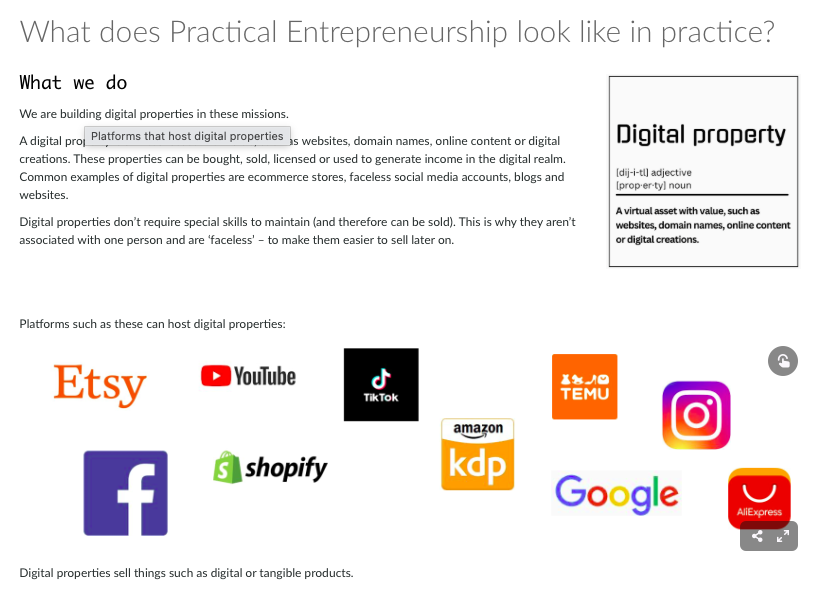
Writing content directly to students meant that teachers could support learning without requiring specialist expertise. An example of a section of a page in the LMS is shown below (Figure 1).
Figure 1
An example of a content page from the course.
Authentic Tasks and Real-World Platforms
A defining feature of the course was the use of real-world digital platforms that reflect contemporary entrepreneurial practice. Rather than simulating business scenarios, students interacted with tools used by actual creators, including:
Etsy for print-on-demand product design,
Amazon KDP for low- and medium-content publishing,
YouTube for faceless content channels,
TikTok for exploring niche-driven viral marketing,
analytics and AI tools for trend research and design.
Students researched competitors, created prototypes, drafted product listings, and analysed traffic or market niches. These tasks aligned with calls in entrepreneurship education to foreground lived, experiential engagement rather than abstract instruction (Cooper et al., 2004; Herrington et al., 2010).
A core principle inherited from RVC was to prioritise student agency. The missions were designed to encourage:
independent inquiry,
experimentation and iteration,
troubleshooting in the face of setbacks,
peer collaboration based on shared interests.
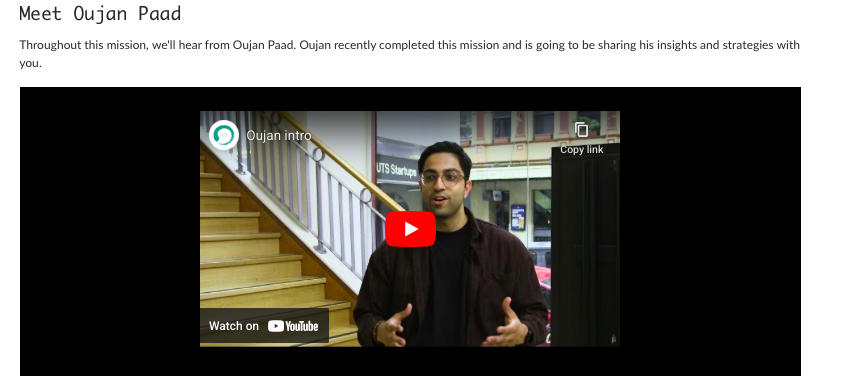
Task prompts provided direction but avoided prescriptive, step-by-step processes. This “scaffolded autonomy” reflected the team’s commitment to fostering an entrepreneurial mindset—including initiative, problem-solving, and resilience—while still offering enough structure for students to feel supported (Lackéus, 2015). Another aspect was using asynchronous near-peer teaching, with recent graduates of the RVC sharing their learning via recorded clips (Figure 2).
Figure 2
A screenshot of a short video of a recent RVC graduate.
Practical entrepreneurship raises significant ethical and legal questions when learners are under 18. To address age restrictions, data privacy considerations, and school policies:
missions emphasised design and prototyping, not live publishing;
students were advised to seek family or school permission before publishing outside the course;
reflective activities prompted students to consider the ethical implications of digital entrepreneurship, including the impact of AI-generated content.
These adaptations ensured that the course remained authentic without compromising safety or policy compliance.
The course incorporated a rich visual and multimedia layer through:
expert videos from UTS Startups founders and alumni,
screen-capture demonstrations,
youth-friendly design templates and examples,
plain-language explanations targeted at a secondary audience.
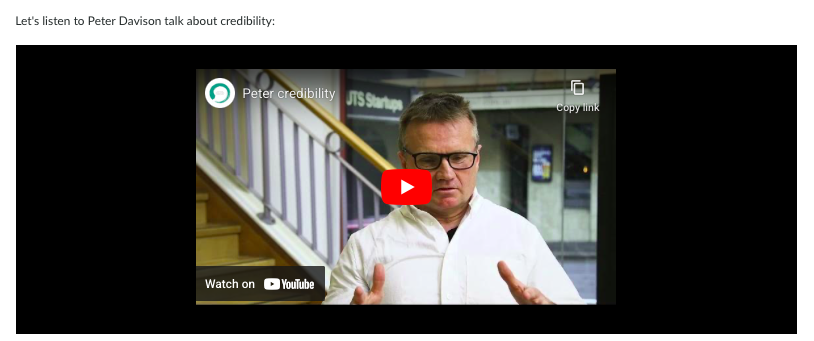
This multimedia approach helped maintain engagement and made complex processes more approachable for learners with different levels of digital fluency. The image below (Figure 3) shows a subject matter expert discussing credibility online.
Figure 3
A screenshot of a short video with a subject matter expert.
Assessment was designed to be both authentic and achievable across varied contexts.
At the end of each mission, students created a short video reflection describing:
what they did,
what they learned,
where they encountered challenges,
what they might change or pursue next.
Two tasks were required:
Process Diary synthesising artefacts and reflections from each mission.
“What’s Next” Plan articulating how students might apply their new skills in further study, work, or personal projects.
These assessments were aligned with the experiential and reflective nature of entrepreneurship learning while satisfying NESA’s accreditation requirements.
The design team prioritised tools that were:
freely available or low-cost,
widely used within industry,
accessible on school devices,
adaptable to future updates.
All core learning occurred within Canvas, with external platforms used only for specific, optional tasks to ensure accessibility across schools.
The pilot implementation of the Practical Entrepreneurship course provided valuable insights into how secondary students engaged with a fully online, practice-oriented entrepreneurship program. Feedback gathered through surveys and interviews with both students and teachers highlighted patterns of engagement, areas of challenge, and broader considerations for designing authentic entrepreneurial learning experiences for adolescents.
The survey and interview instruments used in the pilot were developed to gather formative feedback that would guide the next iteration of the course rather than to produce generalisable research findings. The design team drafted the survey items by drawing on common measures used in internal UTS Startups evaluation cycles, focusing on students’ perceptions of engagement, autonomy, challenge, and confidence. These items were adapted to suit a Year 10 audience and aligned with the learning outcomes specified by the New South Wales Education Standards Authority (NESA) for University Developed Board Endorsed Courses. The interview prompts were similarly shaped by practical design considerations, with questions centred on students’ experiences of the missions, perceived difficulty, use of digital tools, and suggestions for improvement. Both instruments were reviewed by the participating teachers to ensure clarity and age appropriateness, and were intentionally brief to minimise disruption to school activities while still providing insight into how the course functioned in different contexts.
The pilot took place across three non-government secondary schools in Greater Sydney—KG, NT, and HG (these acronyms are used to preserve confidentiality)—with all participating students enrolled in Year 10. While the schools shared similar overall profiles, they varied in technological infrastructure, scheduling arrangements, and prior experience with digital learning initiatives. To maintain confidentiality while preserving contextual richness, all quotations presented in this design case identify the speaker’s school using an acronym and specify whether the comment was made by a student or a teacher.
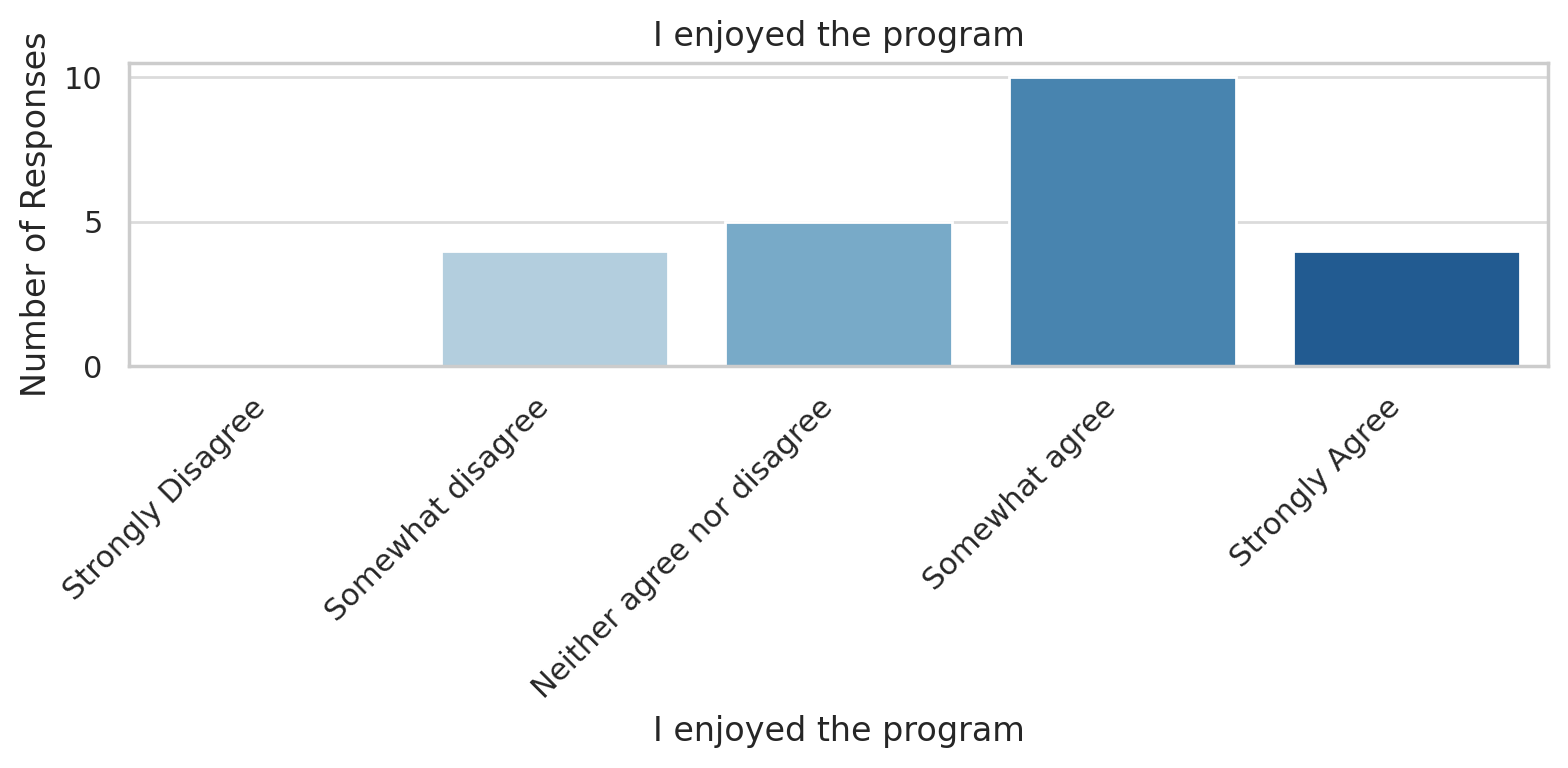
Across the three pilot schools, students reported generally positive engagement with the program. The first figure (Figure 1) shows how students responded to the question of whether they enjoyed the program. The majority of students (14/26) either agreed or strongly agreed. A significant number of students (5/26) neither agreed nor disagreed, and 4/26 students somewhat disagreed. Two students did not complete this question. No students strongly disagreed. This suggests that the design of the course was a good match for the students, and it was pitched at the appropriate level of difficulty. Also, it suggests that most students were able to access the course. These insights are confirmed through the focus groups (and the teacher interviews) discussed below.
Figure 4
Student enjoyment of the program (n = 23)
These insights are confirmed through the focus groups (and the teacher interviews):
KG1 Student: Yeah, I thought all the topics that we studied or were looking at were very interesting, like captivating. And also it went like a lot more in-depth than what I thought it would be because I thought it'd be like surface-level information.
Several students confirmed that the program's structure and Canvas resources effectively scaffolded their learning. Comments like the one below help to demonstrate the value of well-designed learning environments in reducing extraneous cognitive load and building learner self-efficacy:
HG3 Student: So I thought it was going to be like really hard, but when I actually went into the program, everything was like really clearly laid out, like a lot of like YouTube videos and stuff. So it was like easy to see what was going on and to like learn from it. So I thought that was pretty good.
Many described the missions as more detailed, relevant, and practically grounded than expected. The opportunity to work with real digital platforms—and to see their designs reflected in tools used by professional creators—was repeatedly cited as a major motivator. These observations resonate with claims in the literature that authentic tasks heighten learner engagement and deepen understanding (Herrington et al., 2010).
Autonomy emerged as a defining characteristic of student experience. Students valued the flexibility to choose product ideas, explore creative directions, and work at their own pace. Many described the program as an opportunity to express individuality, test concepts, and experiment with design elements.
Students commented positively on the design of opportunities for student autonomy in the program:
NT4 Student: I thought I hadn't like read much about what we were doing, so when I came in, I was very surprised that we had like a lot of free work and were able to work in groups.
This emphasis on autonomy was an intentional design feature of the program, as noted by teachers:
NT2 Teacher: We've deliberately not done any sort of summative assessment based on it, because we didn't want it to be reliant on marks. So as soon as you add marks, I do think you can curb creativity.
However, autonomy also produced some challenges. A small number of students used their creative freedom to produce content that was humorous but not suitable for a school context—highlighting the ongoing tension between supporting creative risk-taking and ensuring safe, appropriate participation. Teachers noted that for some students, autonomy supported maturity and agency; for others, it revealed a need for clearer guardrails.
KG2 Student: And I think when we had we were told we had basically freedom to do whatever we wanted, like put whatever print we wanted, if we made it from AI ourselves or made it on the shirts, a lot of people took the creative freedom the wrong way and put some pretty inappropriate. Some people took went the inappropriate way, which I think if you were to do this again, you'd have to consider because like this is a school account and people are putting on stuff that should not be on a school account.
Informal collaboration emerged organically across groups, with students sharing responsibilities and helping one another troubleshoot technical issues. This aligns with literature suggesting that student agency and collaboration often co-evolve in authentic learning environments (Cooper et al., 2004).
Students identified numerous areas of personal and cognitive growth. Many reported increased confidence in problem-solving, particularly when confronted with trial-and-error processes inherent in digital creation. Several students spoke about resilience—how repeated failures or imperfect outputs encouraged them to persist and refine their approach.
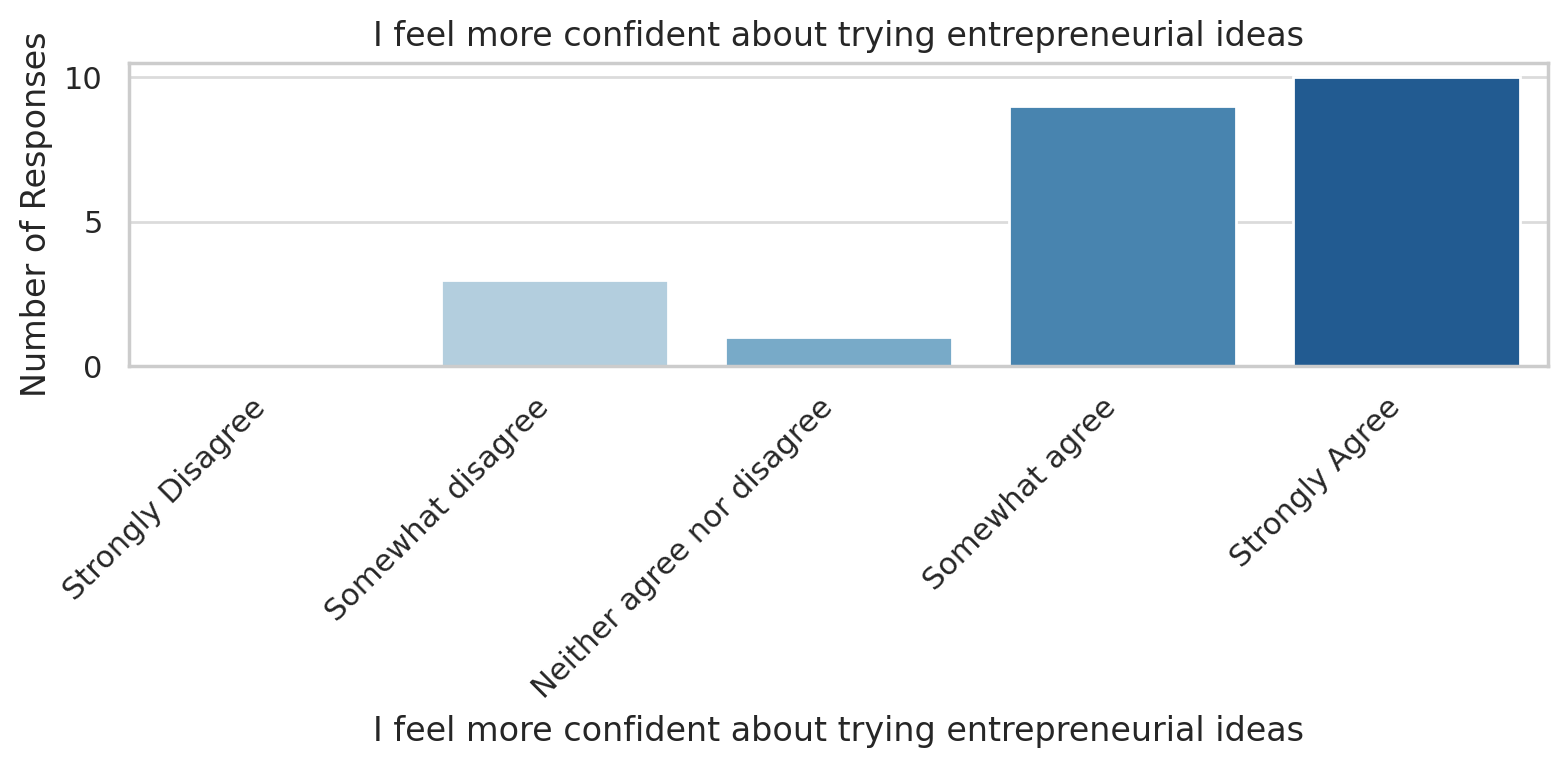
Students felt more confident about trying entrepreneurial ideas after they completed the course (Figure 2): 8/26 students indicated that they agree with the statement to some extent, with 10 strongly agreed. Some students either somewhat disagreed or neither agreed nor disagreed. This highlights one of the key objectives of the program - encouraging young people to think about acting entrepreneurially, and potentially engaging in entrepreneurialism in the future. Again, this is confirmed in the student interviews below.
Figure 5
Student confidence after program completion (n = 23)
Others reflected on their development of creative skills, including those who initially did not see themselves as particularly creative. Exposure to AI tools, analytics platforms, and design software expanded their understanding of what entrepreneurial work could look like. Comments like the one below show how tangible outcomes from student effort can help build confidence and deepen understanding:
KG1 Student: And I thought it was like really fun how, because when I got home, I went on the actual Etsy website and I searched up the title. And it was just really like cool to me how like my thing actually showed up and people can actually buy it.
Students frequently described their creations as meaningful, describing a sense of satisfaction when seeing their designs “live” on platforms—even if only as prototypes. Teachers also observed this strong sense of student ownership and pride in their work, highlighting how authentic, real-world tasks can help to empower students to take initiative and see themselves as capable creators:
KG2 Teacher: It's fascinating how much ownership they take for what they create. You know, was your family involved in this? No, this is my project.
Students reported that the program helped to promote resilience and a growth mindset, through iterative problem-solving through trial and error:
KG5 Student: I thought the RVC program made me like a lot more resilient because I was like doing like trial and error with a lot of the programs because the first time it wouldn't work and I'd like try again and then like maybe like work the next time.
Students also reported that the program helped to support character development and collaboration:
KG6 Student: It also helped with like character building and like teamwork. Like especially in the groups we all had to like have like a common theme or idea and like pick something and like work with it. I think it like really opened my mind to E-commerce because it's a lot easier than I thought it was.
Students encountered several challenges that highlighted the limits and possibilities of the current design. Common issues included:
navigating unfamiliar interfaces,
working around subscription or usage limits on some platforms,
and managing time effectively during longer tasks.
A significant emerging tension involved the role of generative AI. While many students enjoyed experimenting with AI-powered design and ideation tools, others felt that using AI diminished their ownership over creative work. Comments like the one below highlight the importance of striking a better balance with the use of AI to enhance rather than replace creativity:
KG2 Student: Yeah. I think a lot of it, because so much of it was focused on AI and we did a bunch of AI, I think it ended up like we didn't actually do as much creative thinking because it was all just like, oh, you don't have to have any ideas. Just put it into AI. It'll give you ideas. We never actually were using really our brains. We'd just type into AI and AI would be the brain for us, I guess.
Teacher comments like the one below highlight the importance of guiding student use of AI to support creativity and learning, rather than diminishing independent thought:
HG3 Teacher: Students are looking to ChatGPT a lot more in order to complete work for them, do the thinking for them. And I think this course has been able to utilize current videos and getting students to speak to what they understand and what they're learning, rather than just being able to regurgitate something that ChatGPT gives them.
Teachers also shed light on how students valued having structured opportunities to explore AI tools responsibly and creatively when permitted:
NT1 Teacher: And also they've loved with that program being able to use AI, which normally our school policy is that they can't use it. So being able to say, no, you can use it and here's how to use it effectively. They've got a lot of value out of that.
Some students also expressed a desire for deeper content—particularly around topics like YouTube algorithms, audience analytics, or niche selection. These suggestions point to the need for optional extension pathways for highly motivated learners.
Several students articulated thoughtful insights about program equity, noting that the pilot schools were already well-resourced. They expressed a desire for the program to reach schools with fewer opportunities, demonstrating an emerging awareness of systemic inequalities—an unexpected but valuable outcome.
Some students also suggested that certain content could be streamlined to make more efficient use of classroom time:
KG2 Student: I think I would have preferred having like UTS or like the Startups like talk more rather than like having our teachers talk about like Etsy and Amazon because I feel like some of the stuff about Etsy and Amazon we could have learned like ourselves or it could have been a lot of it could have been condensed into like maybe one day of information.
This preference was echoed by some teachers, who recognised the value of introducing new external voices to enrich the learning experience:
KG2 Teacher: I often find that the additional voice, so they've heard my voice for 12 months, okay. So it's just another person's voice saying, here's this amazing thing. And I do think that's really beneficial. So that, that would be a challenge because I wanted it to be different and to be different. Not to remove myself, but I didn't want to be the, the, the only driver of it.
Some students also noted potential gaps in the program, suggesting that additional scaffolds or extension activities could have supported more advanced students wanting deeper insights into digital platforms and entrepreneurial strategy:
KG5 Student: …YouTube shorts, like I think like I kind of like already knew like views get you like money and influence and it's quite easy to create something. But I think I think learning like if like this entrepreneurship course, if we like learn for like the YouTube, like the ways to specifically like learning about how the algorithm algorithm functions like in more detail in order to be able to like find ways to like capitalize on like different like consumers, like and be able to get a wider view view range would have could have been more helpful as well, or helpful to like a career and being able to promote something doing it on top of what we were doing, because what we're doing, we could have done in like an hour or two. And having then we have the rest of the day when we could have like expanded on our knowledge and expand on the company's like, how it works and how we could do it in the future.
Other student comments highlighted concerns around equity, particularly how access to enrichment programs like RVC may unintentionally favour more privileged schools. The comment below reflects a strong awareness of systemic inequality and a desire for broader inclusion, especially for students from under-resourced backgrounds:
KG2 Student: So I saw like the schools it's being tried on all those schools are already quite privileged. I was thinking could you find a way to do this with schools that don't have those same opportunities because like for our school it's already so we have such a good education, such an easy way for us to get into these things like I probably won't need those extra five ATAR points to help me get in here (UTS), while other schools with like less education or like they just haven't had as many like benefits as us it would probably be better for them because now they have an easy way to get into a uni and that probably would take a lot of even more stress off them and stuff.
Comments such as this suggest that students not only benefited from the program, but also considered its broader social implications, advocating for greater access and fairness in educational opportunities.
The pilot implementation of the Practical Entrepreneurship course surfaced a series of important insights about designing authentic, online entrepreneurial learning experiences for secondary students. These reflections do not represent theoretical conclusions but rather practical lessons shaped by real-world constraints, student responses, and the affordances and limits of contemporary digital platforms. The following themes capture the most salient design learnings from the pilot.
A central design challenge involved determining how much autonomy students could successfully manage. Autonomy is a hallmark of entrepreneurship and a key mechanism through which learners build agency, resilience, and self-direction (Lackéus, 2015). Many students embraced this freedom, taking initiative in researching niches, developing prototypes, and collaborating with peers.
However, the pilot also revealed that open-ended tasks require carefully designed guardrails. Some students—particularly younger or less experienced learners—struggled to maintain focus or produced inappropriate content when boundaries were not explicit. These outcomes highlighted the need for:
clearer expectations around appropriate creative choices,
optional scaffolds for students who need more structure, and
explicit teaching around digital professionalism and ethical creativity.
The team came to view autonomy not as an all-or-nothing choice but as a continuum to be navigated intentionally.
Using real-world platforms such as Etsy, Amazon KDP, and TikTok created authentic engagement, but also introduced challenges. Age restrictions, data privacy requirements, and subscription limitations shaped what students could realistically do. As a result, tasks emphasised design and prototyping rather than live publishing.
A key lesson was the importance of platform-agnostic design. While the platforms themselves may change, the underlying entrepreneurial capabilities—market research, product design, value proposition development, audience analysis—remain relevant. Future iterations will continue to focus on transferable principles, with platform-specific examples treated as illustrative rather than central.
Generative AI tools were both empowering and contentious. Students appreciated the speed and novelty of AI-enabled ideation and design tools, but several expressed discomfort with relying on AI to generate ideas. This tension mirrors broader debates in the field around creativity, authenticity, and algorithmic mediation.
The pilot underscored the need to:
explicitly teach AI as a tool that extends human creativity,
provide examples of ethical and responsible AI use,
encourage students to generate initial ideas before using AI,
and integrate reflective prompts that help students evaluate the role AI plays in their work.
These insights align with emerging frameworks for critical AI literacy and point to the importance of embedding ethical reflection within entrepreneurial learning.
One of the most striking reflections came directly from students: several noted that the pilot schools were relatively well resourced, and they felt that the program should be extended to less privileged contexts. This student-initiated concern reinforced the design team’s original motivation to create an accessible and equitable model.
To strengthen equity, future iterations may:
prioritise partnerships with regional and low-SES schools,
develop lower-bandwidth versions of missions,
design pathways for schools with limited teacher capacity,
and create optional peer or mentor networks to support students with less prior experience.
These adjustments recognise that entrepreneurship education has the potential to serve not only individual learners but also broader goals of social inclusion and opportunity.
Teachers involved in the pilot reported that they were able to support students effectively despite having limited prior knowledge of entrepreneurship. Many described learning alongside their students and modelling the curiosity, risk-taking, and iterative mindset encouraged by the course.
This suggests that future versions of the program might benefit from:
light-touch teacher guides with key talking points,
curated examples of student work,
optional professional learning modules,
and resources on managing autonomy and digital safety.
Providing such supports could enhance implementation without shifting teachers into the role of content experts.
Student feedback highlighted variations in readiness and interest, with some students requesting more challenging work (e.g., deeper algorithm insights, advanced analytics) while others asked for clearer guidance. This variation suggests a need for differentiated pathways within missions, such as:
“essentials” tracks,
optional “advanced challenges,”
and expanded examples for students seeking deeper exploration.
Modularity already supports such differentiation; future updates will build on this flexibility.
Overall, the pilot reinforced the complex, situated nature of designing online experiential learning. Authenticity, autonomy, and real-world tools contributed to strong engagement, but they also exposed new challenges related to developmental readiness, platform volatility, and ethical considerations. Looking ahead, the design team anticipates several refinements that will shape the next iteration of the course, now provisionally renamed Digital Micro-Ventures to better reflect its emphasis on small-scale, digitally enabled entrepreneurial experimentation. While the overall eight-mission structure will be retained, specific missions will be adjusted to strengthen clarity, scaffolding, and alignment with students’ developmental needs. Core elements—such as niche research, product design, print-on-demand workflows, and faceless content creation—consistently generated strong engagement and will remain central. However, selected missions will be updated to include clearer guidance around appropriate content creation and more explicit framing of the ethical and responsible use of digital and AI-assisted tools. Student feedback also highlighted an appetite for deeper exploration of analytics, audience insights, and platform algorithms, suggesting the value of optional extension pathways for learners seeking additional challenge.
Future iterations must also account for emerging regulatory constraints. The Australian Federal Government has signalled its intent to restrict or ban social media access for young people under the age of sixteen, a policy shift that may directly affect missions involving platforms such as TikTok or YouTube. While these platforms currently play a significant role in demonstrating contemporary forms of digital entrepreneurship, their potential unavailability reinforces the need for platform-agnostic mission design, ensuring that tasks can be adapted rapidly as policy and technological landscapes evolve. These anticipated changes highlight the importance of ongoing iteration and contingency planning so that Digital Micro-Ventures remains both authentic and compliant with national regulations.
Together, these adjustments reflect the design team’s commitment to preserving the program’s core ethos—autonomy, creativity, experimentation, and authentic digital practice—while ensuring that the course remains developmentally appropriate, ethically grounded, and responsive to the shifting realities of digital entrepreneurship for young people.
The development and pilot implementation of the Practical Entrepreneurship course represent a situated response to a complex educational challenge: how to provide equitable, meaningful, and authentic entrepreneurship learning experiences to secondary students across diverse school contexts. Rather than emerging from a predetermined theoretical framework, the course evolved through a series of pragmatic decisions shaped by the realities of school environments, the affordances and limitations of digital platforms, and the pedagogical commitments inherited from the Rapid Value Creation (RVC) program.
By foregrounding real-world tools and student agency, the course enabled young people to engage in entrepreneurial action—researching niches, designing digital products, experimenting with online marketplaces, and reflecting on their decisions. Students consistently reported increased confidence, curiosity, and a sense of ownership over their work. Teachers, serving as facilitators rather than content specialists, observed high levels of engagement and noted that the program created space for students to take initiative, persist through challenges, and collaborate meaningfully.
At the same time, the pilot illuminated important considerations for future design. These included the need for clearer scaffolding around autonomy, more intentional framing of AI as a creative support tool, differentiated pathways for students with varied levels of readiness, and expanded opportunities to engage schools with fewer resources. Such insights underscore the importance of iterative improvement—a principle central to both entrepreneurship and instructional design.
This design case contributes to the field by documenting how an online entrepreneurship program can be conceptualised and delivered in a way that is flexible, ethically responsible, and attuned to the constraints of real-world school systems. It offers a practical model for others seeking to create scalable and authentic learning experiences that develop students’ entrepreneurial capabilities.
Looking ahead, the design team aims to continue refining the course, expanding access to underserved communities, and incorporating deeper industry connections and advanced content pathways. Through ongoing iteration and dialogue with teachers and students, the Practical Entrepreneurship course aspires not only to introduce young people to entrepreneurial thinking but also to support their development as capable, creative participants in an increasingly digital and dynamic world.
The authors would like to thank UTS Startups and the schools involved for their support of the project.
 EdTech Archives