The rapid advancement of technology has significantly influenced human lifestyles and work environments, necessitating continuous adaptation and skill enhancement. In response, lifelong learning has become an essential process, allowing individuals to acquire new knowledge and skills in a flexible and accessible manner. Online learning, particularly Massive Open Online Courses (MOOCs), has gained widespread popularity as a means of fostering lifelong education. According to ClassCentral, a leading MOOC ranking and information platform, over 220 million learners participated in online MOOC courses across more than 950 universities in 2021, offering over 19,400 courses (Shah, 2020). The demand for MOOCs surged during the COVID-19 pandemic, as platforms like Coursera, EdX, and FutureLearn experienced an increase in user engagement of up to 174%. The flexibility, affordability, and accessibility of MOOCs have made them an attractive learning option for individuals seeking upskilling and reskilling opportunities to advance their careers.
Despite their benefits, MOOCs face a critical challenge: low course completion rates. Studies have shown that MOOC completion rates often fall below 7% (Reich, 2014; Parr, 2013; Onah et al., 2014). The primary factors contributing to this issue include lack of motivation, inadequate time management, misaligned course content, insufficient learner support, and limited digital literacy. To address these challenges, analyzing learner behavior is essential for identifying potential learning obstacles before students drop out. Learning analytics, powered by Artificial Intelligence (AI), has emerged as a promising solution to enhance online learning experiences by monitoring learner interactions, predicting dropout risks, and personalizing learning pathways (Avella et al., 2016; Khalil et al., 2016). AI-driven learning behavior analysis allows educators to develop adaptive learning models that respond to individual learner needs, thereby improving engagement and academic outcomes (Liao et al., 2021).
Several studies have demonstrated the effectiveness of AI-driven learning behavior analysis in MOOC environments. For instance, machine learning algorithms, such as K-Means Clustering and Decision Tree models, have been widely used to classify learners based on their study habits and engagement levels (Tseng et al., 2016; Panagiotakopoulos et al., 2021). Such techniques allow educators to detect at-risk learners and refine instructional strategies to enhance learning experiences. Research has also shown that AI-based clustering methods can effectively identify self-regulated learning patterns, helping instructors tailor MOOC courses to match diverse learning behaviors (Lan et al., 2019; Dyulicheva, 2021). By leveraging AI-driven predictive modeling, instructors can intervene early to support struggling learners, thereby reducing dropout rates and improving learning achievement and satisfaction (Mojarad et al., 2018).
Recent advancements in AI-driven predictive modeling have demonstrated significant potential in categorizing and forecasting online learning behaviors. Chonraksuk and Boonlue (2024) developed a predictive AI model that successfully classified learners on the Thai MOOC platform into three behavioral groups: High Active Participants (HAP), Medium Active Participants (MAP), and Lurking Participants (LP), using K-means clustering. Their findings showed that AI-powered models could accurately predict future learning behaviors with high precision, achieving predictive accuracy rates of 98.47% for HAP, 96.76% for LP, and 95.53% for MAP. These results highlight the potential of AI-driven learning analytics in enhancing MOOC course design by tailoring instructional strategies to learner needs, reducing dropout rates, and increasing student engagement. By leveraging AI models to analyze online learning behaviors, MOOCs can provide more personalized learning experiences and optimize course structures to improve overall learner achievement and satisfaction (Chonraksuk & Boonlue, 2024).
Given the increasing reliance on AI-powered learning analytics, this study focuses on developing AI-driven MOOC learning paths that align with learner behavior to enhance learning achievement and satisfaction. Specifically, the study aims to address challenges encountered in Thai MOOC, a national MOOC platform in Thailand, which shares common issues with other global MOOC platforms, such as low self-regulated learning, mismatched course content, and high dropout rates. By integrating AI-driven learner behavior analysis, this research seeks to optimize MOOC learning pathways, ensuring a more personalized and effective learning experience. This study has three research objectives: 1) To design and develop AI-driven MOOC learning paths that align with learner behavior to enhance learning achievement and satisfaction; 2) To evaluate the suitability of AI-driven MOOC learning paths in aligning with learner behavior and enhancing learning achievement and satisfaction; 3) To conduct a pilot study on the developed AI-driven MOOC learning paths aligned with learner behavior to enhance learning achievement and satisfaction.
By addressing these objectives, this research contributes to the field of AI in education by demonstrating how learning analytics and AI-driven MOOC learning paths can enhance learning achievement and satisfaction in MOOC environments. The findings will provide valuable insights for educators, instructional designers, and policymakers seeking to develop more adaptive and data-driven online learning ecosystems that optimize learner performance and satisfaction.
This study employed a mixed-method research approach, integrating qualitative document analysis, expert evaluation, and quantitative learner data analysis across three phases: (1) Literature Review, (2) Development and Suitability Evaluation, and (3) Pilot Study. This approach ensured a systematic investigation of AI-driven MOOC learning paths, from conceptualization to empirical validation, with a focus on enhancing learning achievement and satisfaction within the Thai MOOC context.
In Phase 1: Literature Review, a qualitative document analysis was conducted to explore AI-driven learning models, MOOC behavior analytics, and adaptive learning principles, particularly within Thai MOOC. Special attention was given to Chonraksuk and Boonlue (2024), which utilized a sample of 8,000 learners enrolled in the Digital Media Creation on Social Networks: KMUTT015 course from February 1 – December 30, 2021. The study applied random accidental sampling to collect online learning behavior data for classification and prediction using an AI system. These insights informed the conceptual model for AI-driven MOOC learning paths, ensuring alignment with learner behaviors, engagement patterns, and AI-driven personalization strategies specific to Thai MOOC users.
In Phase 2: Development and Suitability Evaluation, AI-driven MOOC learning paths were designed based on learner behavior analysis and adaptive learning principles. Their suitability was evaluated by a five-member expert panel selected through purposive sampling, ensuring that each expert possessed a doctoral degree (Ph.D.) or higher and had at least five years of relevant experience. The panel consisted of two online teaching and learning experts, two curriculum design specialists, and one artificial intelligence expert. Experts assessed the suitability of the learning paths using a 5-point Likert-scale evaluation, and their feedback was used to refine the system before its pilot implementation.
In Phase 3: Pilot Study, the AI-driven MOOC learning paths were piloted within the same course as Phase 1, Digital Media Creation on Social Networks: KMUTT015 on Thai MOOC, to assess their impact on learning achievement and satisfaction. The sample group consisted of 105 learners enrolled in the course in November 2022, selected through accidental sampling based on their course participation. Learners were categorized into three groups based on AI predictions: High Active Participants (HAP), Medium Active Participants (MAP), and Lurking Participants (LP). Achievement Rate was measured as the proportion of learners in each group who successfully completed the course. Additionally, learner satisfaction was evaluated using a 5-point Likert-scale survey, covering aspects such as course overview, course outline, instructional design, and course materials. Descriptive statistics, including mean (M) and standard deviation (SD), were used to summarize satisfaction levels across Thai MOOC learner groups.
This study examined the impact of AI-driven MOOC learning paths aligned with learner behavior on learning achievement and satisfaction in Thai MOOC, specifically in the Digital Media Creation on Social Networks: KMUTT015 course. The research focused on designing, evaluating, and piloting AI-driven learning paths to address learner engagement challenges and improve course outcomes. Learners were classified into three behavioral groups—High Active Participants (HAP), Medium Active Participants (MAP), and Lurking Participants (LP)—using an AI-powered classification model. The study assessed the effectiveness of personalized learning paths, expert evaluation of their suitability, and their impact on learning achievement and satisfaction through a pilot study involving 93 participants enrolled in November 2022.
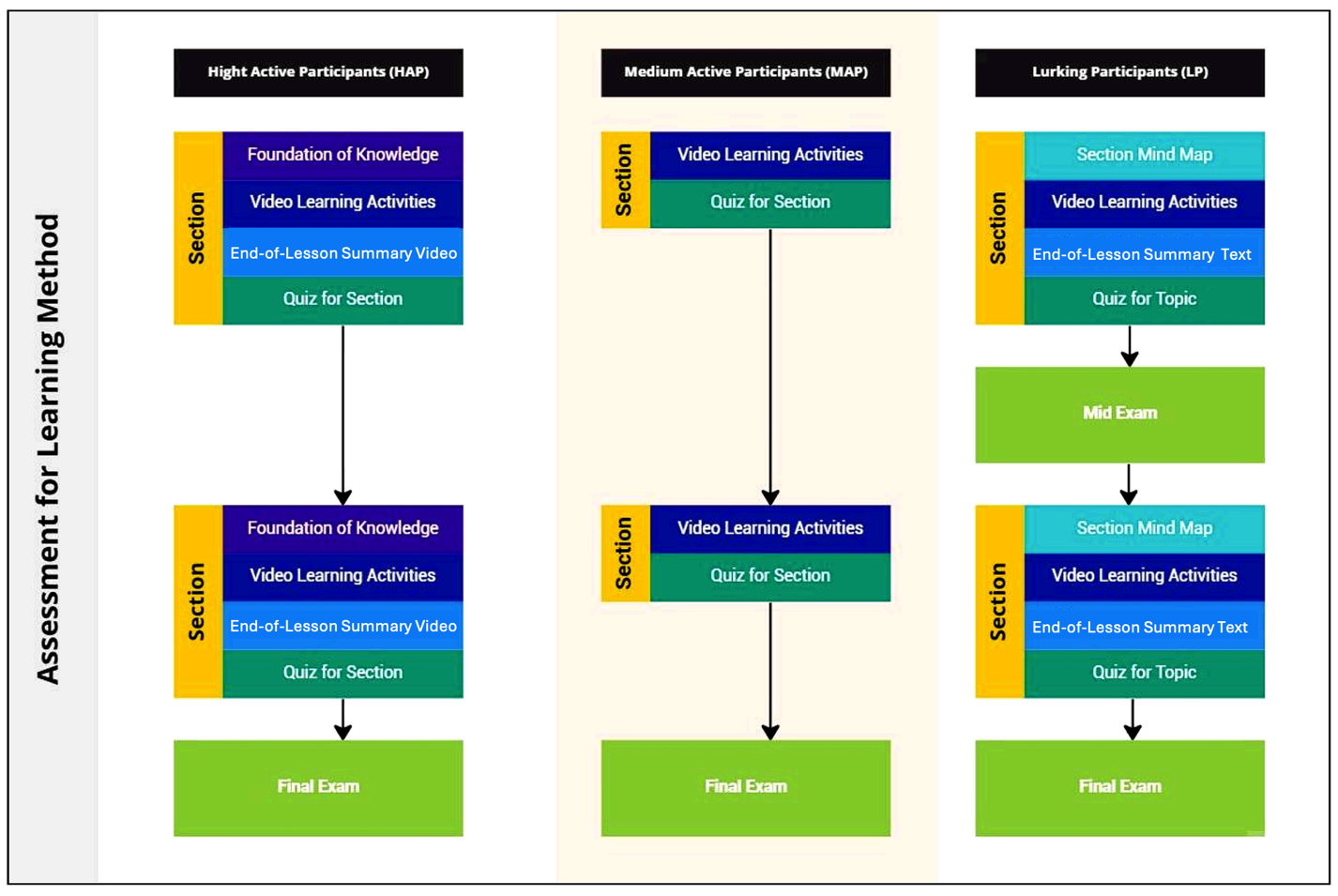
The AI-driven MOOC learning paths were designed and developed to align with learner behavior, ensuring personalized learning experiences for different engagement levels. The Assessment for Learning Method (Chanchusakun, 2018) was applied to structure the course design, emphasizing continuous assessment, learner feedback, and instructional adjustments to support diverse learning behaviors. This approach enabled real-time monitoring of learners, allowing for adaptive modifications to the teaching styles based on learner progress and engagement. The AI-driven learning paths were categorized into three types, corresponding to the High Active Participants (HAP), Medium Active Participants (MAP), and Lurking Participants (LP) learner groups, to enhance learning achievement and satisfaction. The conceptual model of these AI-driven learning paths, illustrating the classification of learners, adaptive learning recommendations, and instructional strategies, is shown in Figure 1.
For the HAP learners, who exhibited high motivation but lacked basic knowledge and had irregular study habits, the course was designed to support content retention and revision. Since these learners often studied in spare time, such as weekends, they frequently forgot previously learned content upon returning to their studies. To mitigate this issue, the researcher developed self-study PDFs for pre-lesson preparation and video summaries for each chapter to facilitate quick content review and knowledge reinforcement. These resources aimed to help learners re-engage with the material efficiently, ensuring continuity in their learning process.
For the MAP learners, who had sufficient foundational knowledge of the course content and represented the majority of participants, the standard Thai MOOC learning materials were deemed suitable without requiring additional modifications. Since these learners demonstrated steady engagement and familiarity with the subject, no significant instructional adjustments were necessary. The course maintained its original structure, allowing MAP learners to progress through the existing content at their own pace.
For the LP learners, who had limited study time but a strong motivation to earn certificates, adjustments were made to encourage sustained engagement and prevent reliance on ineffective learning methods. To address this challenge, the course included a section explaining the course benefits and effective study strategies to foster intrinsic motivation. Additionally, the quiz distribution was restructured, increasing the frequency of assessments by introducing mid-content quizzes rather than having a single final exam. Since LP learners tend to avoid lengthy instructional materials, the course incorporated concise summary sections at the end of each lesson, along with interactive discussion features that allowed students to communicate with instructors at any time. These adjustments were designed to promote active participation, improve knowledge retention, and encourage more meaningful engagement with the course content.
The structure and components of the AI-driven MOOC learning paths aligned with learner behavior, including learner classification, adaptive learning recommendations, and instructional design strategies, are illustrated in Figure 1. This model provides a visual representation of how AI-driven approaches were integrated into course design, content delivery, and learner engagement mechanisms to optimize learning achievement and satisfaction. Once learners complete the first lesson, the ThaiMOOC system analyzes their learning behavior and predicts their engagement patterns to assign them to one of three primary learning paths—HAP, MAP, or LP—ensuring that each learner follows a course structure tailored to their learning style and study habits.
To facilitate this process, the ThaiMOOC system delivers the next learning path via email, providing learners with a direct link to the recommended course sequence. This adaptive mechanism enables the MOOC platform to personalize learning experiences, enhance learner retention, and increase course completion rates through AI-driven recommendations. The alignment of these learning paths with learner behavior is visually represented in Figure 1.
Figure 1
Conceptual Model of AI-Driven MOOC Learning Paths
Following the design of the AI-driven MOOC learning paths for the Digital Media Creation on Social Networks: KMUTT015 course, the researcher identified the need to develop additional instructional materials to enhance learner engagement, knowledge retention, and adaptive learning experiences. These materials were designed to align with the High Active Participants (HAP), Medium Active Participants (MAP), and Lurking Participants (LP) groups, ensuring that each category of learners received tailored support based on their study behaviors. The enhancements aimed to facilitate self-paced learning, reinforce key concepts, and improve the overall learning experience within the AI-driven MOOC framework.
To optimize content delivery, three key types of additional learning materials were developed. First, end-of-lesson summary videos were created in collaboration with course lecturers to help learners quickly review key concepts, particularly beneficial for those needing to revisit prior learning efficiently. Second, end-of-lesson summary text was developed by the researcher after enrolling in the course, providing concise written overviews of each lesson to support learners who preferred structured textual content. Third, mind maps were designed to visually represent key concepts in each chapter, helping learners understand content relationships more effectively. All materials were reviewed by course lecturers to ensure accuracy and instructional alignment before integration into the learning paths.
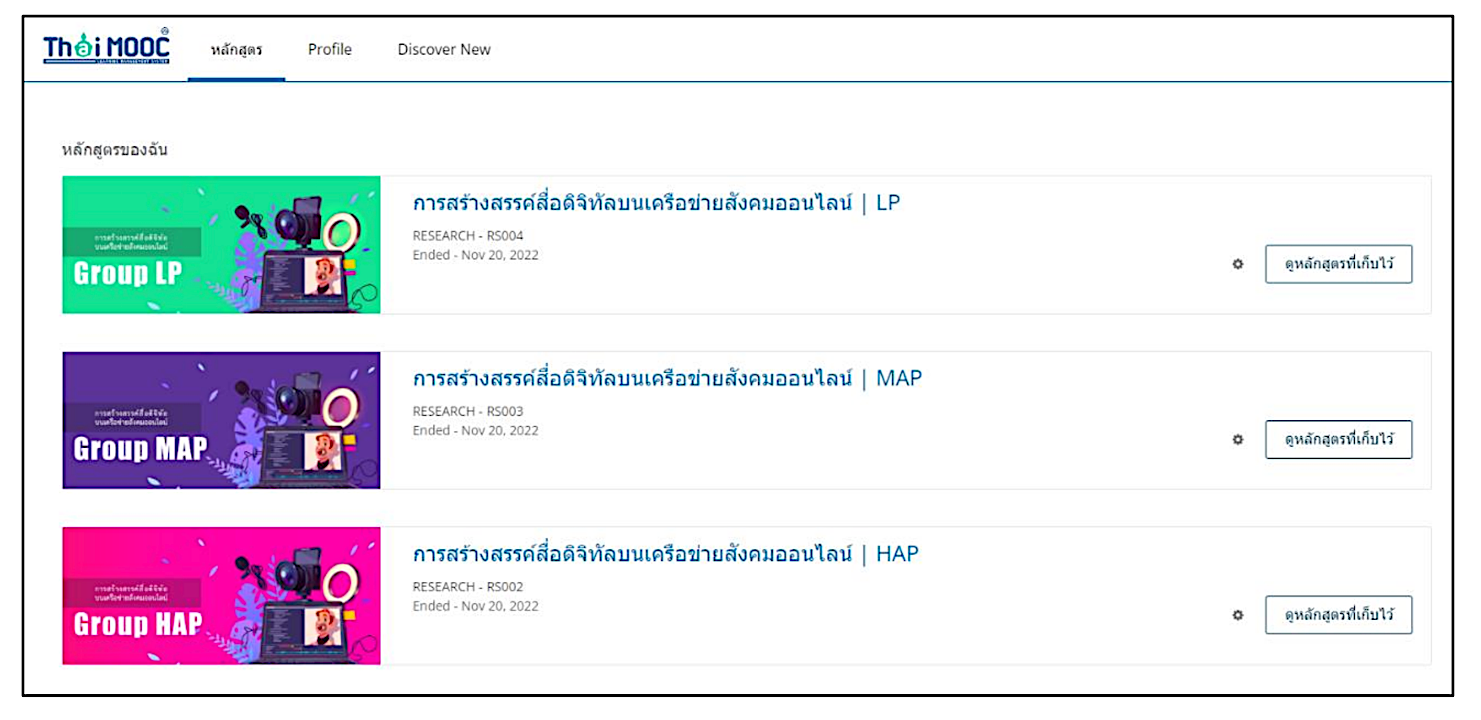
These supplementary materials were incorporated into the AI-driven MOOC learning paths to enhance learner engagement and content accessibility. By providing multiple formats of instructional support, the course accommodated diverse learning behaviors, enabling learners to engage with content in a way that best suited their study habits. The integration of these enhancements within the structured learning paths is illustrated in Figure 2, which presents how these materials were embedded into the course framework to optimize learning achievement and satisfaction.
Figure 2
Course Variations for Different Learner Groups in Thai MOOC
To ensure the suitability of AI-driven MOOC learning paths, a panel of five experts in online teaching, curriculum design, and artificial intelligence assessed the suitability of the developed learning paths using a 5-point Likert scale. The evaluation dimension consisted of four key steps: Data Collection, Prediction, Learning, and Conclusion, each addressing different aspects of AI-driven course development, predictive modeling, and instructional effectiveness. The results, summarized in Table 1, indicate that the AI-driven model achieved an overall mean score of 4.71 (S.D. = 0.44), signifying an excellent level of suitability for implementation in MOOC environments
Experts provided high ratings for the data collection step, particularly for Navigational Events, Video Interaction Events, and Problem Interaction Events as effective measures of learner behavior. However, they suggested that Common Event data within ThaiMOOC required further updates, recommending additional methods to improve data completeness. The prediction step received the highest ratings, with experts affirming the effectiveness of AI-driven analytics, K-Means Clustering for learner classification, and Decision Tree algorithms for predicting learning behavior as highly suitable for adaptive learning.
The learning step was also rated at an excellent level, confirming that the course structure and instructional design effectively aligned with diverse learner behaviors, thereby enhancing learner achievement and satisfaction. Similarly, the conclusion step was deemed appropriate for assessing learner achievement across experimental and sample groups and summarizing learner satisfaction based on AI-driven behavioral predictions. Experts recommended that future research extend the data collection period and expand the number of analyzed participants to enhance predictive accuracy and increase generalizability. Overall, the expert evaluations confirmed that AI-driven learning paths are highly suitable for MOOC-based education, offering a scalable and adaptable model for personalized online learning experiences.
Table 1
Suitability Evaluation of AI-Driven MOOC Learning Paths
Evaluation Dimension | M | SD | Suitability Level |
1. Data Collection Step | |||
1.1 Course content suitability for online learning | 4.80 | 0.45 | Excellent |
1.2 Analysis using Common Events | 4.40 | 0.89 | Good |
1.3 Analysis using Navigational Events | 4.80 | 0.45 | Excellent |
1.4 Analysis using Video Interaction Events | 4.80 | 0.45 | Excellent |
1.5 Analysis using Problem Interaction Events | 4.60 | 0.55 | Excellent |
Summary of Data Collection | 4.68 | 0.56 | Excellent |
2. Prediction Step | |||
2.1 Tools for analyzing online learning behavior | 4.80 | 0.45 | Excellent |
2.2 Learner's Online Learning Behavior Format | 4.80 | 0.45 | Excellent |
2.3 Using K-Means Clustering Algorithm for classification | 5.00 | 0.00 | Excellent |
2.4 Using Decision Tree Algorithm for prediction | 5.00 | 0.00 | Excellent |
Summary of Prediction | 4.90 | 0.22 | Excellent |
3. Learning Step | |||
3.1 Development of an online course suitable for learners’ behavior | 4.80 | 0.45 | Excellent |
3.2 Suitability of courses for learners' online learning behavior | 4.80 | 0.45 | Excellent |
3.3 Learners' satisfaction questionnaire on AI-predicted learning behavior | 4.40 | 0.55 | Good |
Summary of Learning | 4.67 | 0.48 | Excellent |
4. Conclusion Step | |||
4.1 Analyzing and comparing learners' achievements | 4.60 | 0.55 | Excellent |
4.2 Summary of learners' satisfaction based on AI-driven learning behavior | 4.40 | 0.55 | Good |
Summary of Conclusion | 4.50 | 0.55 | Excellent |
Overall Summary | 4.71 | 0.44 | Excellent |
The pilot study was conducted to assess learning achievement and learner satisfaction. The study involved a sample of 93 learners, selected through accidental sampling, who participated in the Digital Media Creation on Social Networks: KMUTT015 course on the Thai MOOC platform in November 2022. Initially, 105 learners volunteered, but only 93 participants provided sufficient online learning behavior data for AI-based classification and prediction. These learners were categorized into three groups based on AI-driven behavioral analysis: High Active Participants (HAP) (n = 18), Medium Active Participants (MAP) (n = 34), and Lurking Participants (LP) (n = 41). The AI system analyzed learners’ engagement patterns after their first lesson and assigned them to personalized learning paths accordingly.
To measure learning achievement, the researcher defined a two-week study period during which learners were required to complete their assigned course path. Those who did not complete the course within the timeframe were considered to have not met the criteria. The final results indicated that 83 out of 93 learners successfully completed their assigned learning path, resulting in an overall achievement rate of 89.25%, significantly higher than the 64% completion rate of the general MOOC sample group. The LP learners demonstrated the highest achievement rate (92.68%), followed by HAP learners (88.89%) and MAP learners (85.29%). The detailed achievement rates for each group are summarized in Table 2.
Table 2
Learning Achievement Based on AI-Predicted Learner Behavior
Learner Group | Number of Learners | Successful Completions | Achievement Rate (%) |
HAP | 18 | 16 | 88.89 |
MAP | 34 | 29 | 85.29 |
LP | 41 | 38 | 92.68 |
Overall Summary | 93 | 83 | 89.25 |
At the conclusion of the course, a satisfaction survey was administered using a 5-point Likert scale to evaluate course overview, instructional design, and course materials. The results showed that all three learner groups reported high levels of satisfaction with the AI-driven learning paths (M = 4.46, SD = 0.67). However, LP learners exhibited the highest satisfaction levels (M = 4.53, SD = 0.67), followed by HAP learners (M = 4.44, SD = 0.66), and MAP learners with the lowest satisfaction (M = 4.41, SD = 0.68). This pattern suggests that LP learners, who benefited from additional guidance and structured assessments, found the AI-driven learning paths particularly effective in enhancing engagement and motivation.
This study investigated the development and evaluation of AI-driven MOOC learning paths aligned with learner behavior to enhance learning achievement and satisfaction in the Thai MOOC environment. The research was conducted in three phases: (1) a documentary review, focusing on AI-driven learning behavior classification and predictive modeling; (2) the design and suitability evaluation of AI-driven learning paths assessed by an expert panel; and (3) a pilot study, which examined learning achievement rates and learner satisfaction among participants categorized by the AI predictive model.
The AI-driven MOOC learning paths were structured and developed to align with learner behavior, adaptive learning recommendations, and instructional design strategies. The model integrates AI-driven behavioral analysis to classify learners into three primary groups: HAP, MAP, and LP, ensuring that each learner receives a course structure tailored to their engagement level and study habits. After completing the first lesson, the ThaiMOOC system analyzes learner behavior, predicts engagement patterns, and assigns the most appropriate learning path. To enhance accessibility and course completion rates, the system delivers the next learning path directly via email, allowing learners to follow their personalized learning trajectory seamlessly. This adaptive AI-driven mechanism optimizes instructional delivery, fosters engagement, and improves learning outcomes in MOOC environments.
The expert panel evaluation (M = 4.71, SD = 0.44) confirmed that the AI-driven classification, prediction, and guided learning model demonstrated high suitability, particularly in data collection, behavioral prediction, and instructional alignment. The pilot study results further validated the model’s effectiveness, showing an overall achievement rate of 89.25%, with LP learners achieving the highest completion rate (92.68%). Learner satisfaction was also high (M = 4.46, SD = 0.67), with LP learners reporting the highest satisfaction levels. These findings suggest that AI-driven learning paths effectively optimize course engagement, improve learning outcomes, and support diverse learner needs in MOOC environments.
The study underscores the potential of AI-powered learning analytics in addressing low completion rates, engagement challenges, and content adaptability in MOOCs. The integration of AI-based learner classification, predictive modeling, and adaptive learning design enhances personalized learning pathways and contributes to more effective instructional strategies. Future research should extend data collection periods, explore scalability across multiple MOOC platforms, and refine AI models for real-time learner intervention, ensuring greater adaptability and sustainability in AI-driven education systems.
The author expresses gratitude to the Thai Cyber University Project, Office of the Permanent Secretary, Ministry of Higher Education, Science, Research, and Innovation, for granting access to online learning behavior data (ETL) from the Thai MOOC platform and providing guidance on MOOC-based teaching. Special thanks also go to the instructors of Digital Media Creation on Social Networks (KMUTT015) for developing a high-quality course and to the students whose participation contributed valuable data for this study.
 EdTech Archives