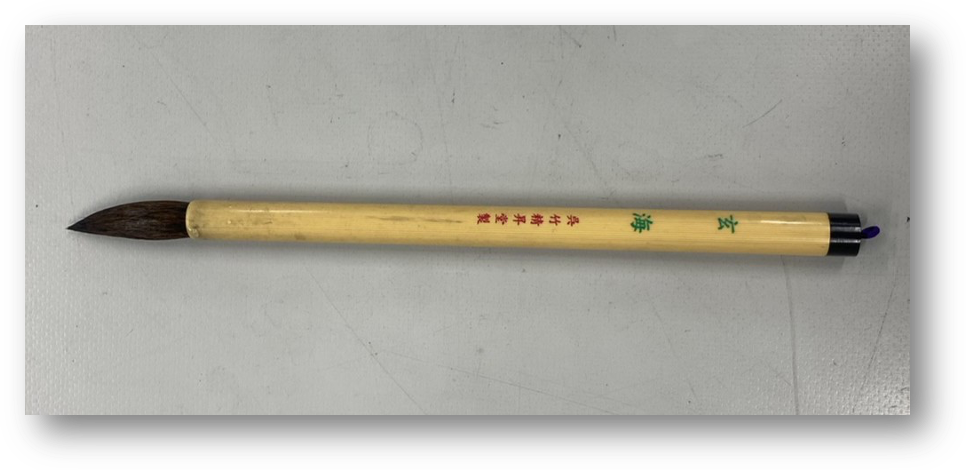
Calligraphy, or hand lettering with a brush (Image 1), was introduced to Japan about 1,500 years ago, originating in China. Until paper and pencil were introduced to Japan, calligraphy was the only tool for written communication. Since then, it has been a tradition for Japanese people to learn calligraphy. Originally, it was limited to well-educated citizens until 1900, and it became compulsory for Japanese children to learn it in schools from 1945 onwards. Calligraphy consists of nine different types of strokes. Each character is formed by a combination of these nine strokes.
Figure 1
Calligraphy Brush
Elementary school teachers are required to teach calligraphy to students in third through sixth grade once a week. The traditional approach to teaching calligraphy is “learning by watching.” Students learn calligraphy by watching demonstrations by their elementary school teachers. Many students used to take private calligraphy lessons in addition to learning it at school.
Many younger teachers nowadays claim that they are unable to demonstrate calligraphy for several reasons. First, they had fewer opportunities to practice calligraphy when they were young than experienced teachers did, due to the integration of technology. As technology integration was promoted at school, traditional practices were less valued. The total number of calligraphy lessons in schools was reduced, and fewer people took private calligraphy lessons. Second, the total number of teachers in their 30s and 40s was smaller than that of teachers in their 50s, due to economic crises in Japan in the past 30 years. Most Boards of Education did not hire tenured teachers from the mid-1990s to the present. Teachers in their 20s reported having fewer opportunities to learn calligraphy from experienced teachers. The pedagogy of calligraphy is not being successfully passed on to the next generation.
The group of authors developed three sets of instructional video clips for teaching calligraphy using iPads. The target users of the clips were younger teachers. They could practice calligraphy by watching the clips, and they could also use the clips to teach calligraphy to their students instead of demonstrating it themselves. We created the clips based on the principles and guidelines for maximizing student learning from video content by Brame (2016). The first element to consider was cognitive load. To highlight important information (e.g., hand lettering with rhythms), we displayed keywords in the clips. We also included brief out-of-video text to explain the goal of each video clip.
The second element was student engagement. We kept each video clip for under two minutes so that elementary school students could maintain their focus. Each lesson consisted of multiple video clips. Each video clip included narration in child-friendly language, like that on Sesame Street. The narrator spoke clearly and with enthusiasm.
The third element was active learning. Each video clip included interactive questions to increase relevant cognitive load, improve memory via the testing effect, and improve student self-assessment. We encouraged the students to discuss the questions with their peers.
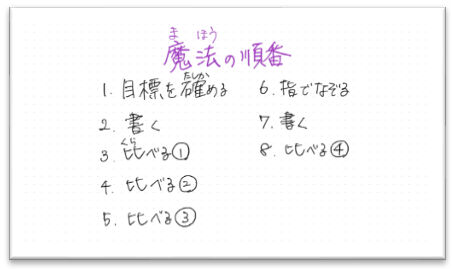
In the fall of 2024, we asked an elementary school teacher to teach calligraphy to 15 fifth-graders using three sets of video clips we created. One characteristic of the students was that their class averages in Math and Japanese on the nationwide standardized tests were 10 points below the national average. Their academic abilities were limited; however, the students were very eager to learn. Their school was in a remote town in central Japan, where traditional cultures and values were maintained. Thus, some of them attended private calligraphy cram schools after school to learn calligraphy. To teach calligraphy, the teacher used the clips in each class. Each clip had a specific learning goal, which was visualized and stated clearly in the clip (Image 1). The teacher made sure the students met the goal, then showed the next clip to help them meet the next goal (Image 2). This step-by-step approach was completely different from the traditional approach, in which students practiced calligraphy independently in silence after watching the teachers’ demonstration, and the learning goals were not clearly stated or visualized.
Figure 2
Left-Brushing with the Goal
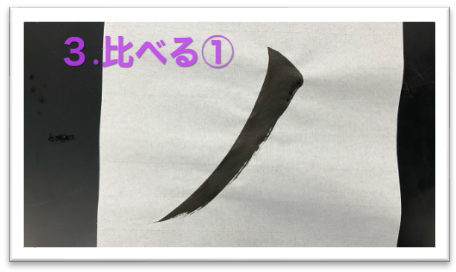
Figure 3
Step-by-Step Approach
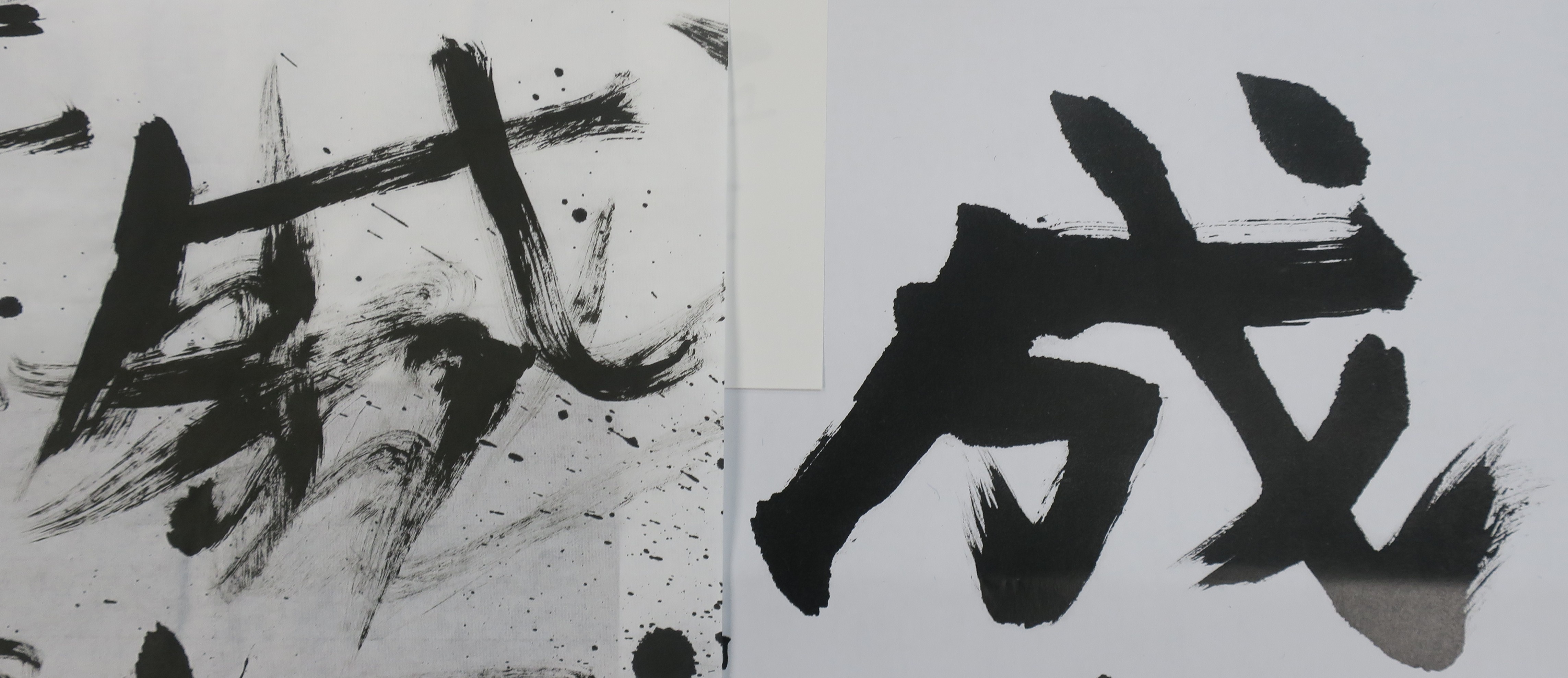
The teacher taught four classes using video clips instead of the traditional approach. Each class lasted 45 minutes. To evaluate the effectiveness of teaching with the video clips, we collected students’ work from the first and last classes. Then, we evaluated a target character meaning “growth” using the traditional calligraphy rubric. The rubric had seven criteria. Examples of the criteria were “total balance” and “formation of the character” (Image 4). Other criteria, such as “left brushing” (Image 5) and “round shape,” were unique to evaluating calligraphy. Each criterion was assessed using a four-point scale. Overall, all students improved. The average score of 15 students increased from 2.1 in the first class to 3.0 in the last class.
After implementation, we interviewed the teacher to assess the user-friendliness and effectiveness of using video clips for teaching calligraphy. She reported that it was easy to teach with the video clips. She also reported that she was surprised to see her students become more focused on learning calligraphy via video clips than through demonstration. The combination of the step-by-step approach and the simple goal for each video clip made it easy for the students to follow the instructions; as a result, they could focus on achieving the goals (Image 6). In addition, she said the video clips were helpful for her student with learning disabilities, who learned alongside peers in regular classes.
Figure 4
Total Balance Example
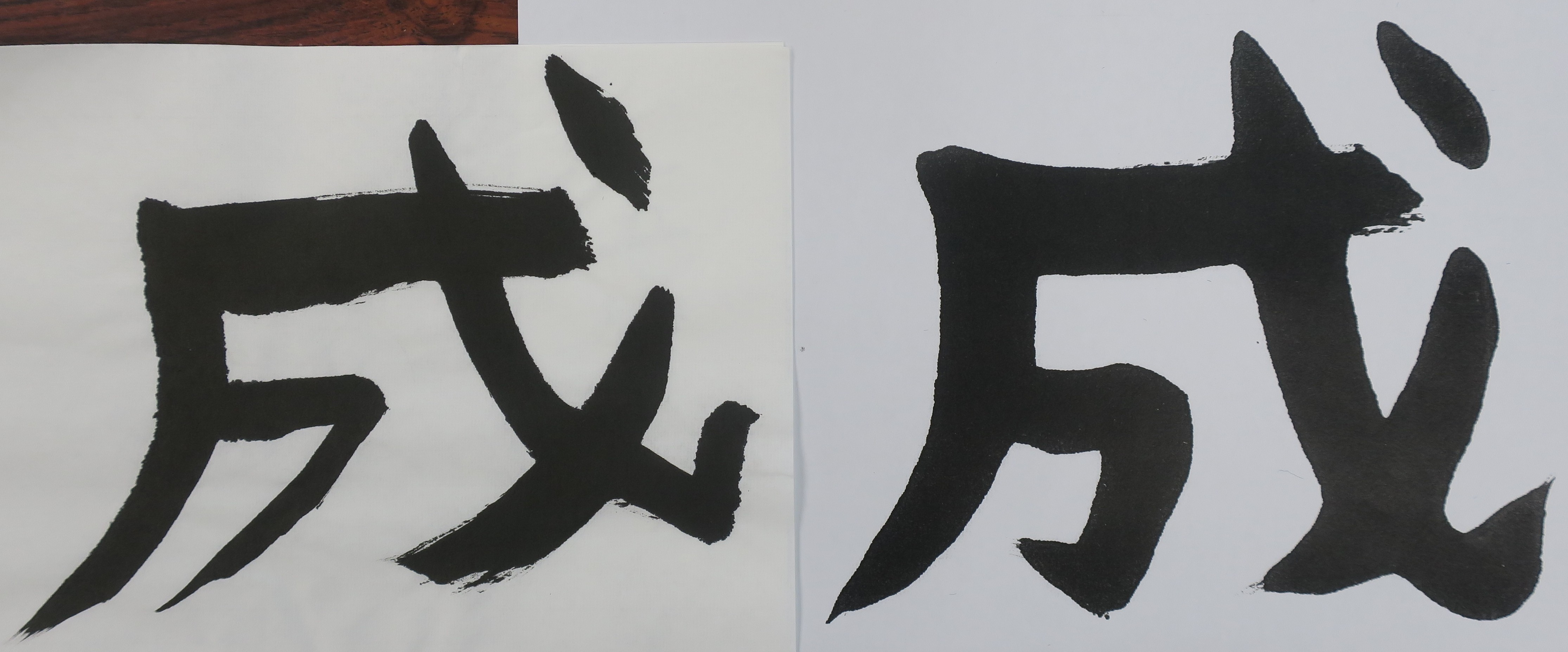
Figure 5
Left Brushing Example
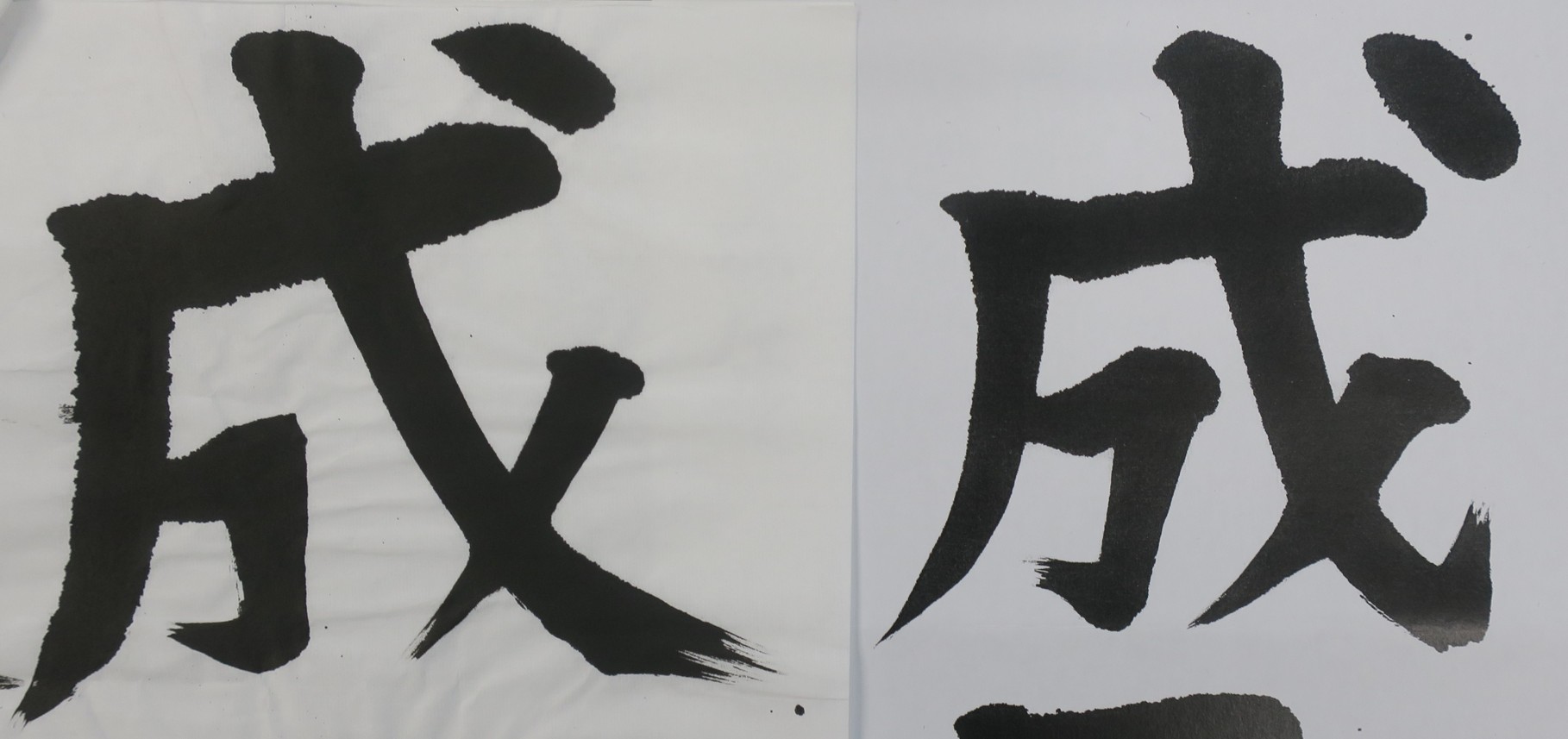
Figure 6
Work of a Student with Learning Disabilities
In this project, we created three sets of video clips using iPads. We plan to ask pre-service teachers at our university who are majoring in calligraphy to create video clips using Movie Maker on iPads, and hope they will continue producing more video clips even after graduating. The authors will also continue to create additional video clips and make them available on our websites so that any teacher in Japan can use them for instruction. Calligraphy is a dying tradition in Japan; however, we believe that technology can help preserve it. Our project could serve as a model for integrating technology into traditional educational settings.
 EdTech Archives