Student engagement often depends on relatedness, a fundamental psychological need that can be disrupted when students feel disconnected from peers or instructors (Ryan & Deci, 2000). In online learning environments, this disconnection comes not only from the isolated nature of the setting but also from experiences of othering. Students may experience othering when they feel discomfort or self-doubt due to their perceived differences, or when they feel offended or marginalized in their interactions with classmates, instructors, or course materials. These reactions can be heightened by their diverse identities, shaped by personal experiences, beliefs, cultural backgrounds, and physical characteristics, which may make students hesitant to fully participate or express themselves (Choi et al., 2020; Delahunty, 2014; Öztok, 2013; Phirangee & Malec, 2017).
Although online learning lacks a physical presence, students’ identities remain visible through discussions, group projects, and assignments, where written and verbal cues reveal aspects of who they are (Bucholtz & Hall, 2005; Burgess & Ivanic, 2010; Delahunty et al., 2014; Öztok, 2019). These identities have become even more noticeable as instructors incorporate multimodal tools, including synchronous webcam use, especially since the shift to online learning during the COVID-19 pandemic (Dennen et al., 2022).
While prior research has focused largely on racial minorities and explicit exclusion, such as microaggressions and discrimination (Harwood et al., 2016; Pyne & Means, 2013), less is known about the more subtle, implicit forms of exclusion tied to varied identities, despite their wider relevance.
Using a cross-sectional survey, this study addresses this gap by examining college students’ experiences of othering in online learning spaces at a single university, focusing on both implicit and explicit exclusion based on students’ perceived differences. The research questions guiding this study are:
How do college students perceive their differences related to their backgrounds and beliefs?
What are college students’ experiences of othering based on these perceived differences?
How do these experiences shape students’ engagement in online learning spaces?
The sample comprised 535 students from a large U.S. research university, recruited through a research participation pool. Participants had taken at least one course with an online component. The majority were female (71.2%), Caucasian (64.1%), and traditional college students (92.3%) aged 18–24, representing a diverse range of disciplines.
The survey instrument, developed based on previous research (Choi et al., 2020), included Likert-type items that assessed students’ perceived differences and the frequency of othering experiences. Internal consistency was good to excellent, with Cronbach's alpha values ranging from .855 to .922. The survey also contained multiple-choice, open-ended, and demographic questions.
We conducted descriptive analyses, including frequency distributions for all survey items. We also used thematic analysis to examine the open-ended responses. These responses helped explain when students felt uncomfortable or excluded due to their differences and how such experiences influenced their engagement in online learning spaces. To compare othering experiences between white students and students of color, we conducted chi-square tests.
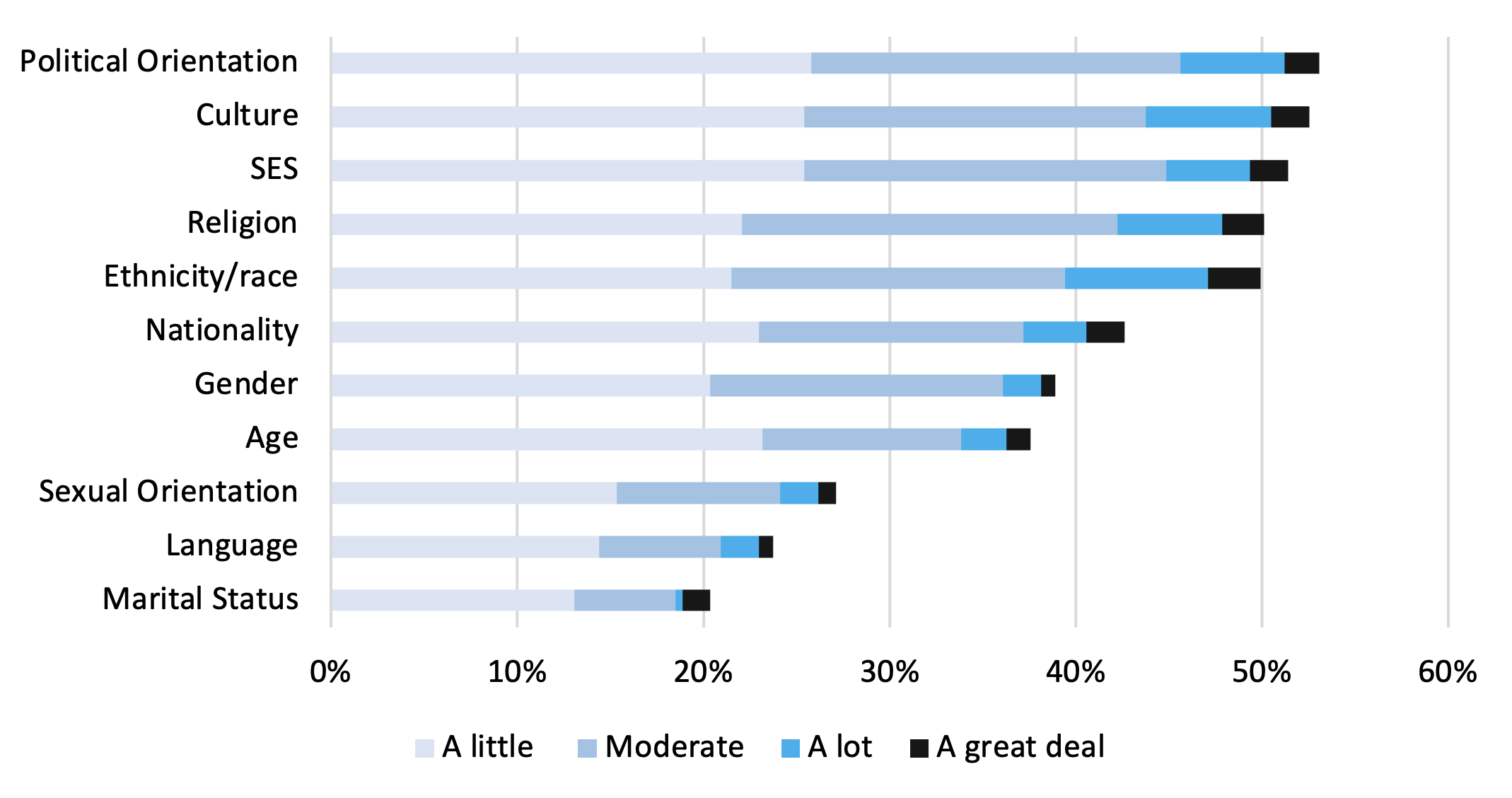
Approximately half of the students acknowledged perceiving their differences to some extent (Min=20.37%, Max=53.08%), most notably in political orientation (53.08%, n=284), culture (52.53%, n=281), and socioeconomic status (51.41%, n=275) (see Figure 1). Among those who perceived differences, the highest reports of strong differences (“a lot” or “a great deal”) were in ethnicity/race (10.46%, n=56), culture (8.79%, n=47), and religion (7.85%, n=42).
Figure 1
Self-Perceived Differences Based on Individual Backgrounds and Beliefs
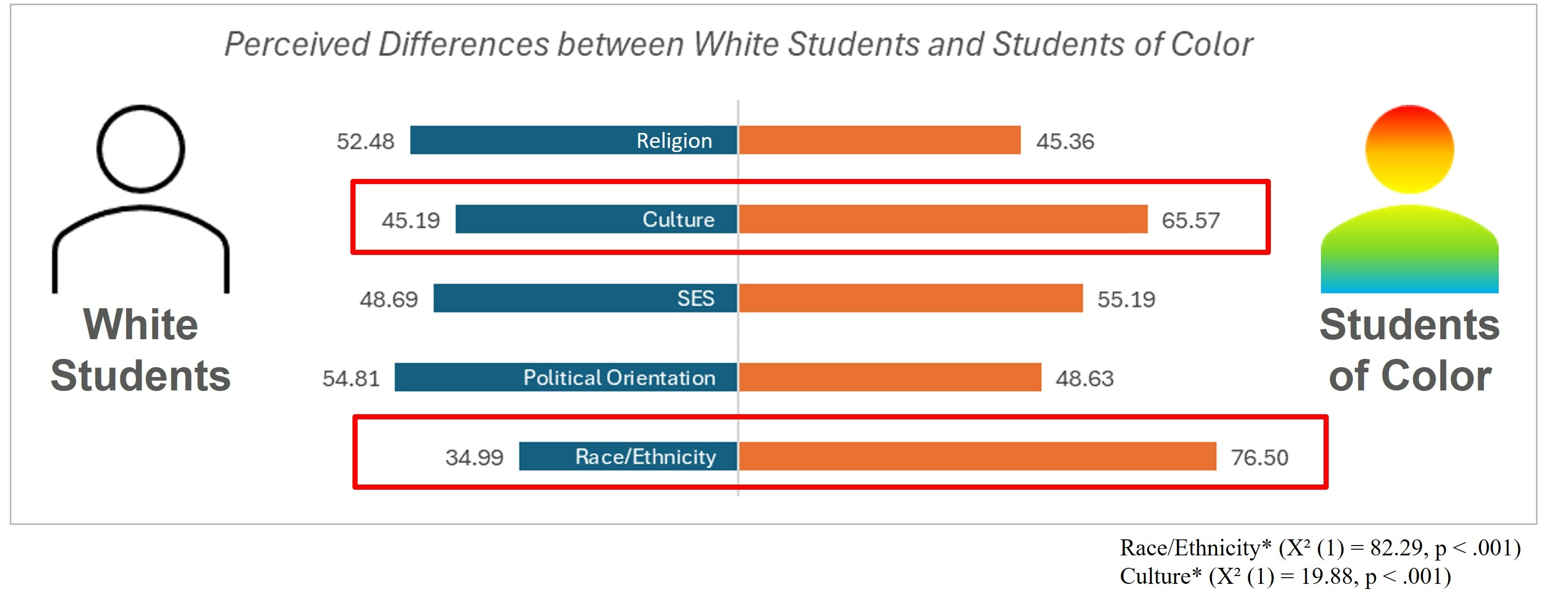
A chi-square test of independence (with α = 0.05) was conducted to examine differences between white students and students of color regarding race/ethnicity, political orientation, SES, culture, and religion. These categories were chosen because a relatively high number of participants reported experiencing othering in these aspects. The results revealed significant differences in self-perceived differences related to ‘race/ethnicity’ (χ²(1) = 82.29, p < .001) and ‘culture’ (χ²(1) = 19.88, p < .001) between white students and students of color. Of the 183 students of color, 76.5% perceived differences related to race/ethnicity, whereas only 34.99% of white students reported perceiving such differences. For cultural differences, 65.57% of students of color perceived them, compared to 45.19% of white students (see Figure 2).
Figure 2
Self-Perceived Differences: White Students vs. Students of Color
In the open-ended responses, students shared subtle and implicit experiences of othering that created discomfort and disconnection. One student shared a personal story in class and later realized that most classmates received financial support from their parents, which made her feel out of place. Another said they were afraid to speak on Zoom for fear of being judged. Some felt uneasy when classmates made seemingly harmless comments that reflected cultural stereotypes. Age also shaped these experiences: younger students often hesitated when older classmates were seen as more experienced and knowledgeable, while some older students with children struggled with group work and sometimes overcompensated to show commitment. Although these moments were self-perceived rather than overtly hostile, students still felt othered. These accounts show how even implicit exclusion can create a sense of detachment.
On the other hand, some students shared more intense and explicit forms of othering, including microaggressions and discrimination, which led to feelings of fear, alienation, and frustration. One student described feeling shocked and uncomfortable when an instructor repeatedly used the term “Negro spirituals,” reinforcing a sense of racial bias and exclusion. Another student recalled frustration and alienation after hearing a targeted comment about Hispanic/Latinx people, which made them feel singled out and unwelcome. Gender-based discrimination also led to discomfort and anger. Some students felt disrespected when their abilities were questioned based on their gender. Additionally, political and religious bias created feelings of frustration and isolation, as some instructors assigned one-sided readings that disparaged specific political and religious beliefs.
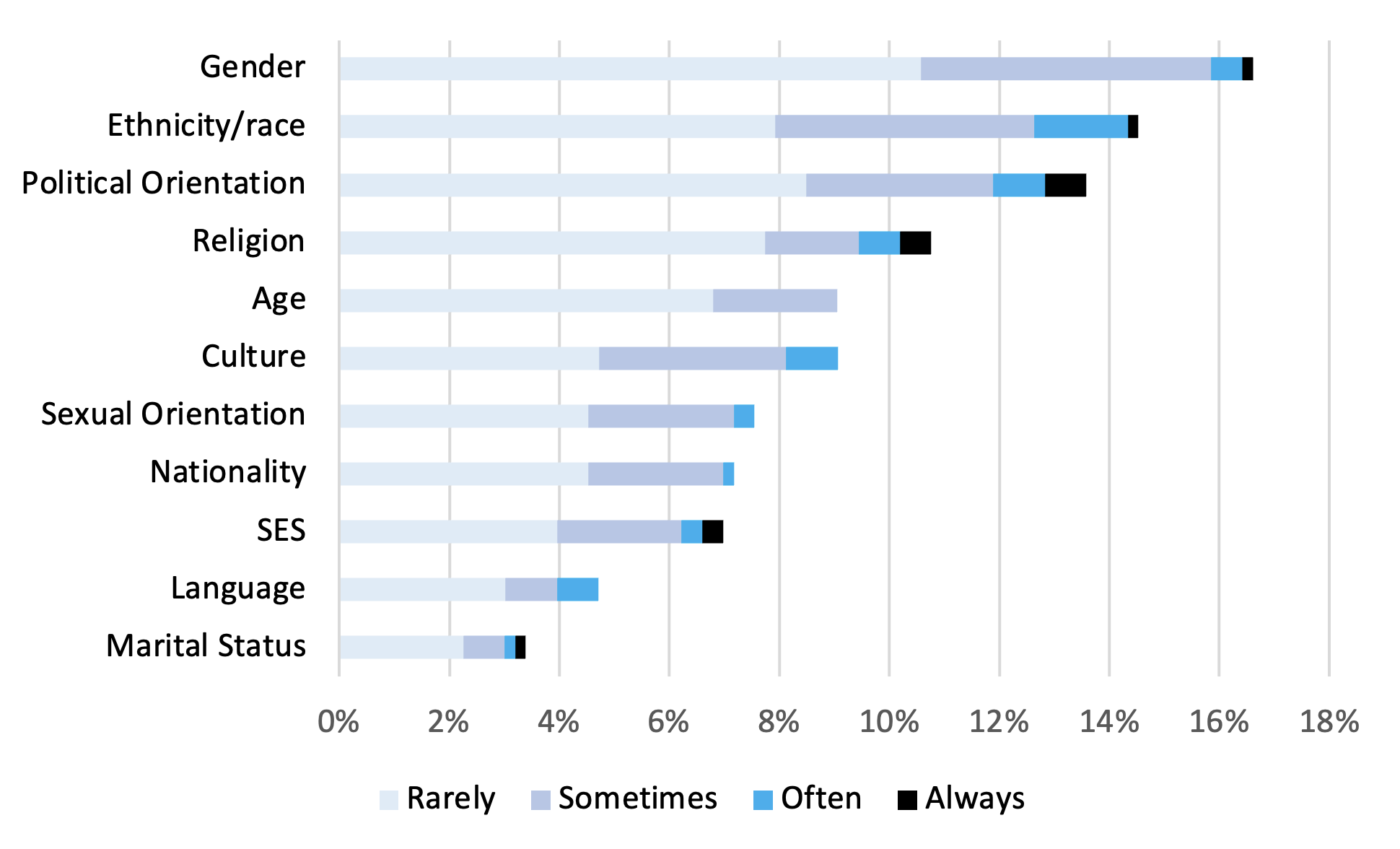
According to the Likert-scale items measuring the frequency of microaggression and discrimination, gender-based biases (26.08% for microaggression, 16.61% for discrimination), political orientation (25.89% for microaggression, 13.58% for discrimination), and race/ethnicity (22.51% for microaggression, 14.53% for discrimination) were reported most frequently (see Figures 3 and 4).
Figure 3
Self-Reported Microaggression (N=533)
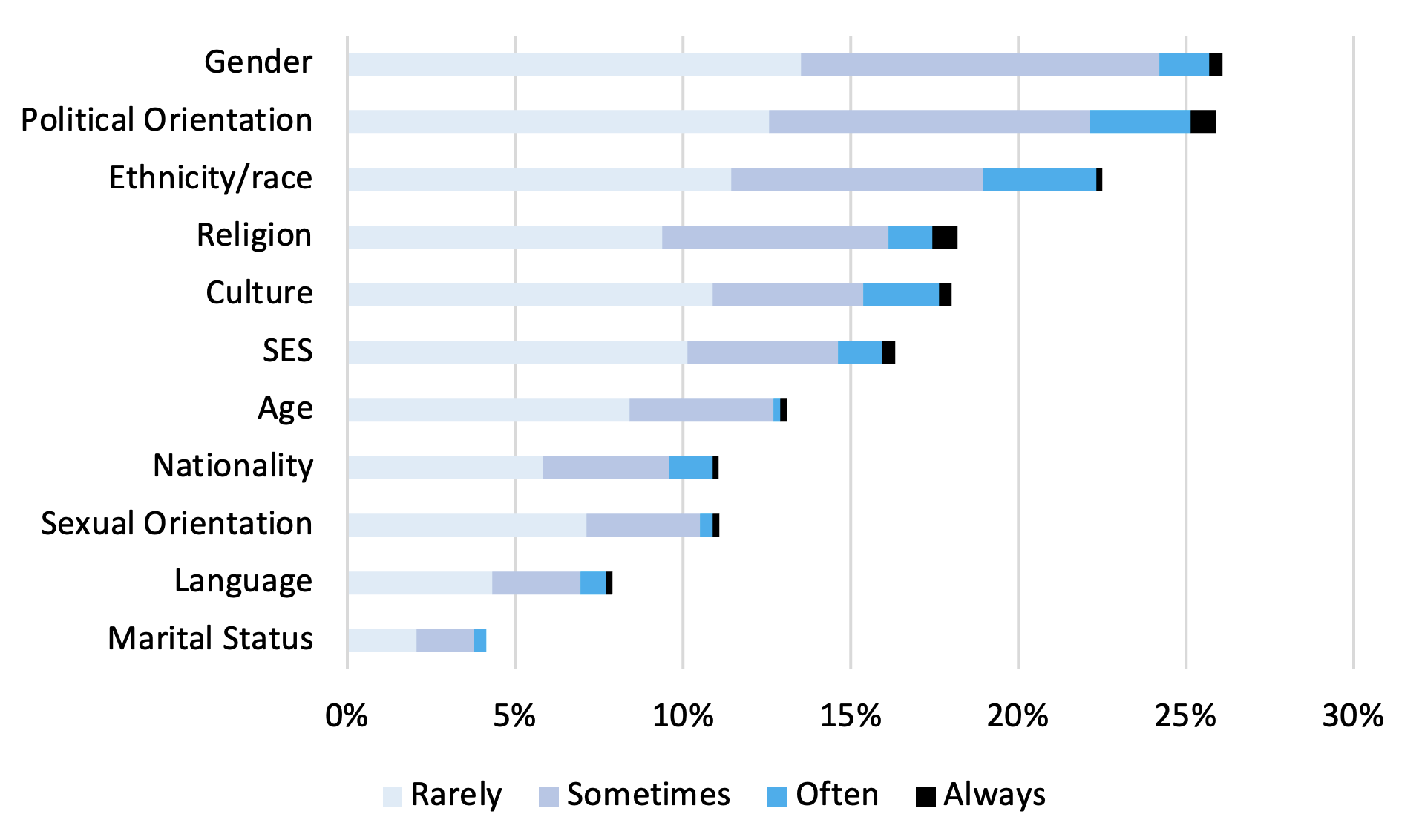
Figure 4
Self-Reported Discrimination (N=530)
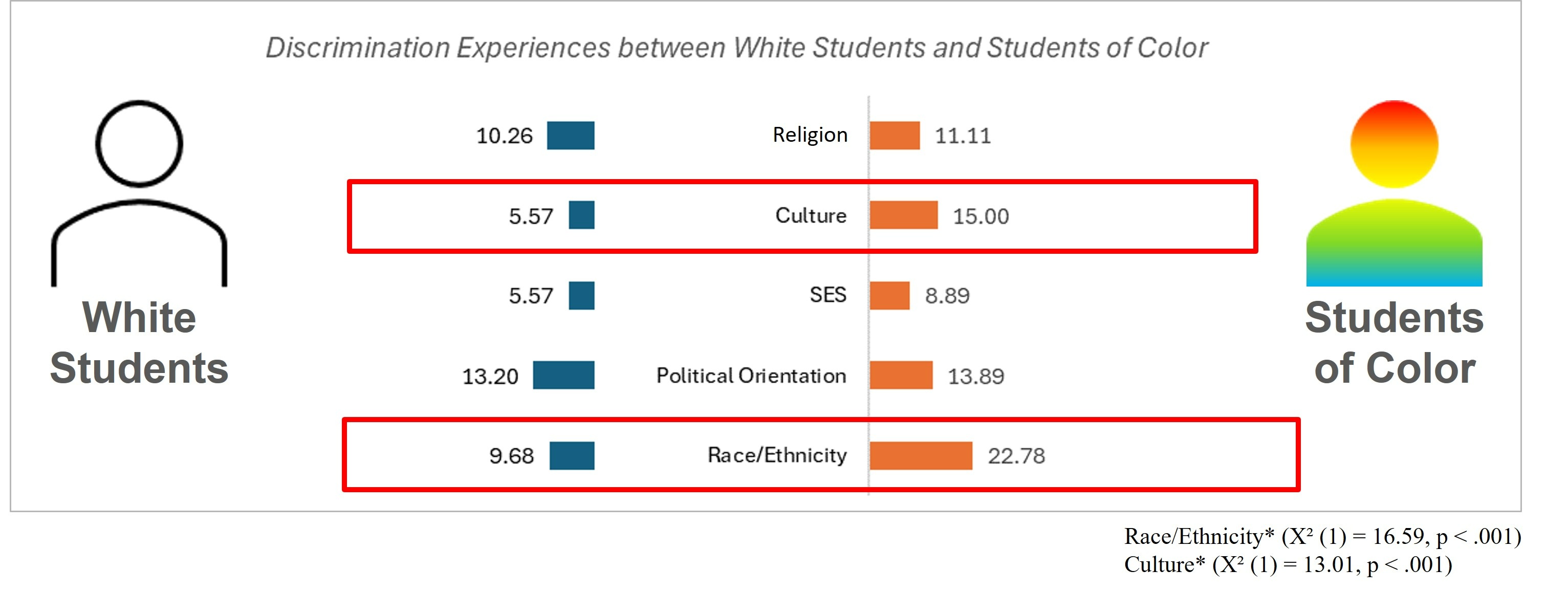
The chi-square results revealed significant differences in experiences of microaggression related to ‘race/ethnicity’ (χ²(1) = 60.70, p < .001) and ‘culture’ (χ²(1) = 41.11, p < .001) between white students and students of color (see Figure 5). Significant differences also emerged in students’ reports of discrimination, specifically in relation to race/ethnicity (χ²(1) = 16.59, p < .001) and culture (χ²(1) = 13.01, p < .001) (see Figure 6).
Figure 5
Microaggression: White vs. Students of Color
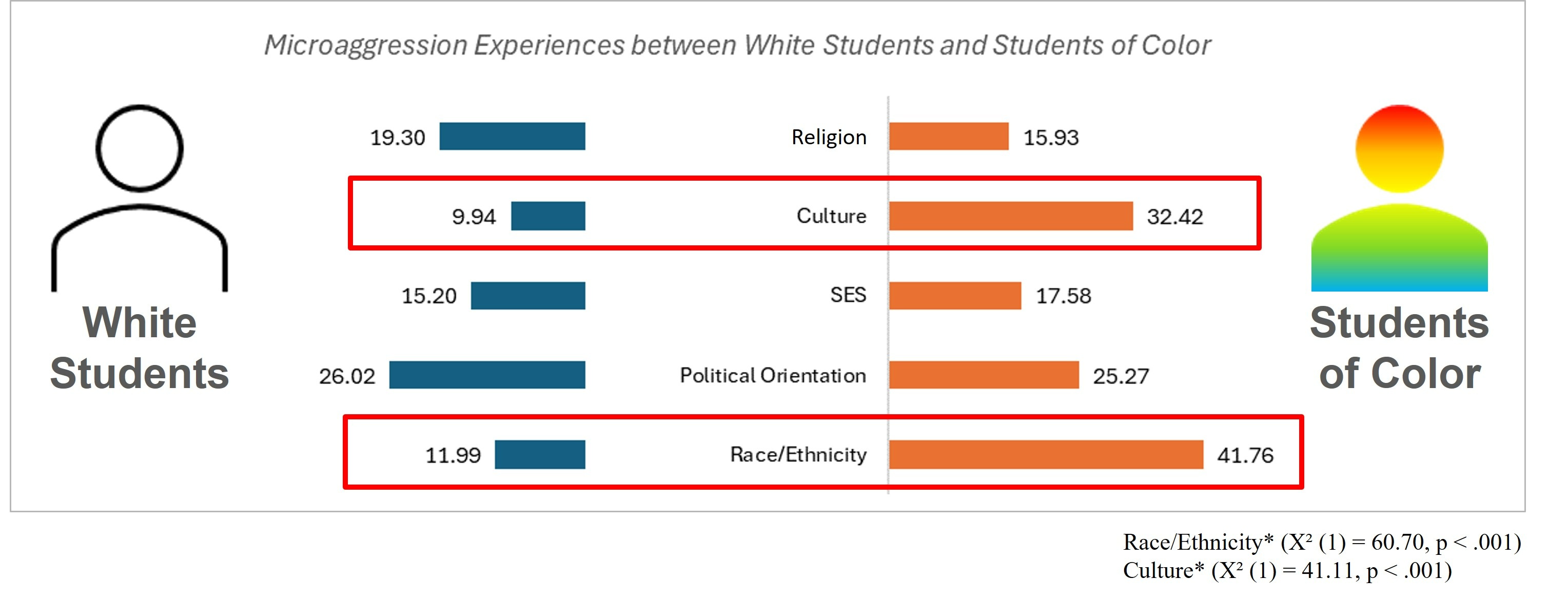
Figure 6
Discrimination: White vs. Students of Color
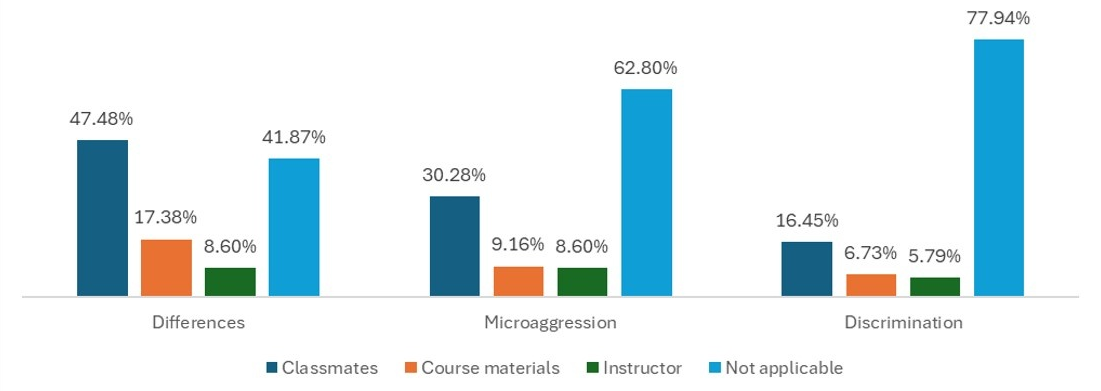
Participants were also asked about course factors that contributed to their experiences of othering. Figure 7 illustrates the frequency distribution of factors related to perceived differences, microaggressions, and discrimination. Most participants attributed these experiences to their classmates: 47.48% reported perceived differences due to their peers, 30.28% reported experiencing microaggressions from peers, and 16.45% reported experiencing discrimination from peers.
Figure 7
Course-Related Factors Contributing to Students’ Sense of Otherness (N=535, multiple selection)
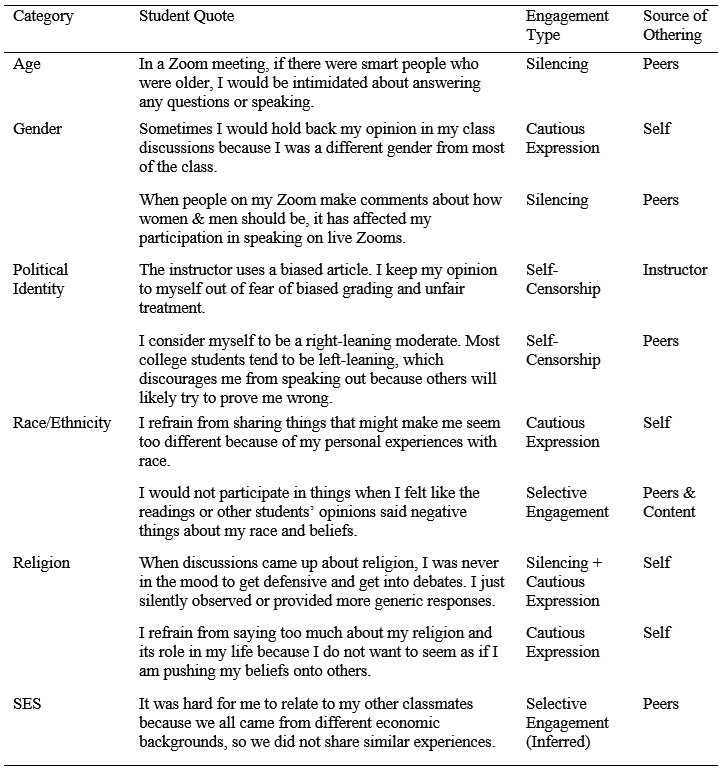
In response to the open-ended question about students’ experiences of othering, we received approximately 100 valid responses. Table 1 presents examples of both implicit and explicit forms of othering based on students’ backgrounds and beliefs, including political orientation, religion, and gender identities. These responses illustrate how students’ self-perceived differences—and their interactions with peers, instructors, and course materials—resulted in othering experiences that influenced their participation through cautious expression, self-censorship, selective engagement, and silencing.
When students experienced othering, many became hesitant to share their views (cautious expression), filtered their opinions due to fear of judgment (self-censorship), avoided certain discussions (selective engagement), or remained silent to prevent potential conflict (silencing). Students were particularly reluctant to voice opinions about political or religious topics and issues related to race/ethnicity. Gender, SES, and age also shaped these dynamics.
Table 1
Othering Experiences and Engagement (Examples)
Across various social factors, political orientation, culture, and socioeconomic status were the most commonly reported areas of difference, while race/ethnicity, culture, and religion were perceived as more significant distinctions. Open-ended responses showed that these perceived differences led to both implicit and explicit forms of exclusion. Most students described implicit exclusion, where they did not face overt discrimination but experienced discomfort, self-doubt, or fear of judgment. Others reported explicit exclusion, particularly related to race/ethnicity and culture among students of color, which led to frustration and a sense of marginalization.
Although most students reported that their perceived differences had little effect on their participation, some still became hesitant to share their views or were discouraged from engaging due to experiences of othering. Instructors should be mindful of these issues and adopt strategies that actively support participation. This includes fostering diversity, openness, accommodation, and respect to prevent both implicit and explicit forms of othering and to create a positive learning environment. Providing more opportunities to share diverse opinions and encouraging respect for differences can further promote inclusive engagement.
This study used a cross-sectional survey at a single university, which limits its generalizability to the broader university population. Future research across multiple institutions is needed to enhance the study’s applicability of the findings.
We appreciate Dr. Vanessa Dennen, our doctoral advisor, for her guidance and insightful feedback on this study.
 EdTech Archives